We see roofs pushed to their breaking points every season in Connecticut.
For the full scope of work behind this guide, see our roof replacement service.Identifying the subtle hints of deterioration early can save you thousands. Our goal is to help you spot these issues before a major leak forces your hand.
This guide covers the specific signs you need a new roof, giving you time to plan a roof replacement on your schedule.
The Eight End-of-Life Roof Signals: Signs You Need a New Roof
We inspect hundreds of local residential and commercial properties every year. The visible signs of failure remain remarkably consistent across the state.
Our team recommends checking for these specific indicators at least twice a year.
Spotting these old roof warning signs early prevents catastrophic interior damage.
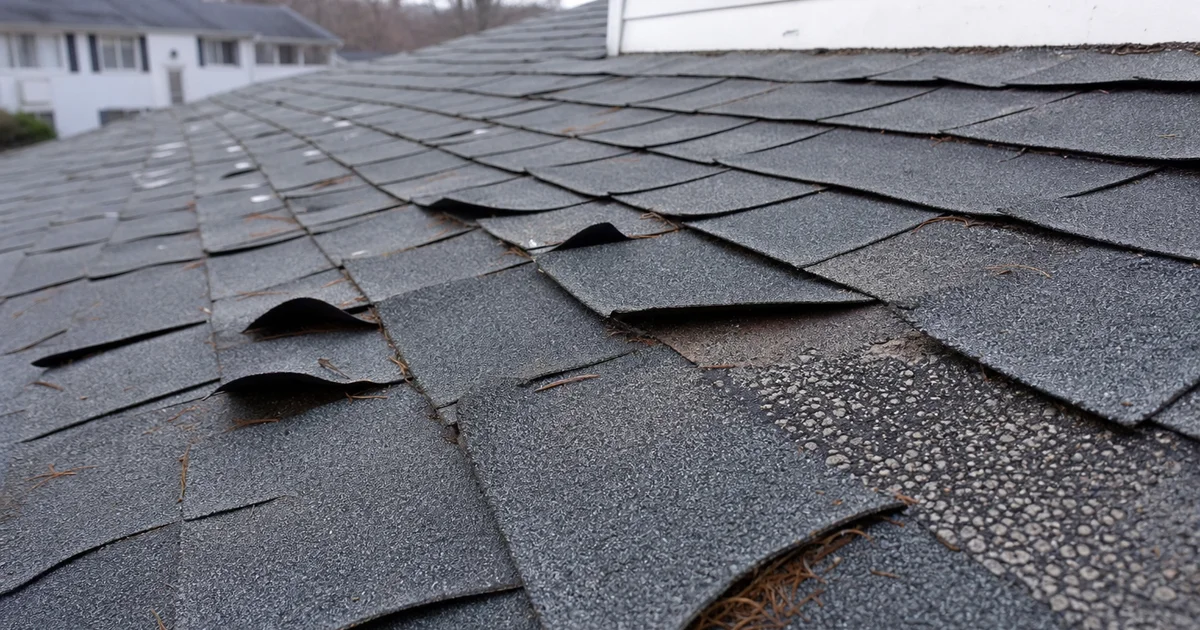
1. Curling, Cupping, or Clawing Shingles
Thermal shock from rapid spring temperature swings causes asphalt to expand and contract violently. We often find that poor attic ventilation accelerates this rapid deterioration.
These visual cues show the shingle has lost its adhesive bond to the layer below:
- Curling: Corners lifting upward away from the deck.
- Cupping: Centers sinking down to form a bowl.
- Clawing: Middles pushing up while edges stay flat.
Our standard rule is that once this deformation affects 20% of the visible field, your home is exposed. You can easily spot these deformed edges from the ground on most houses.
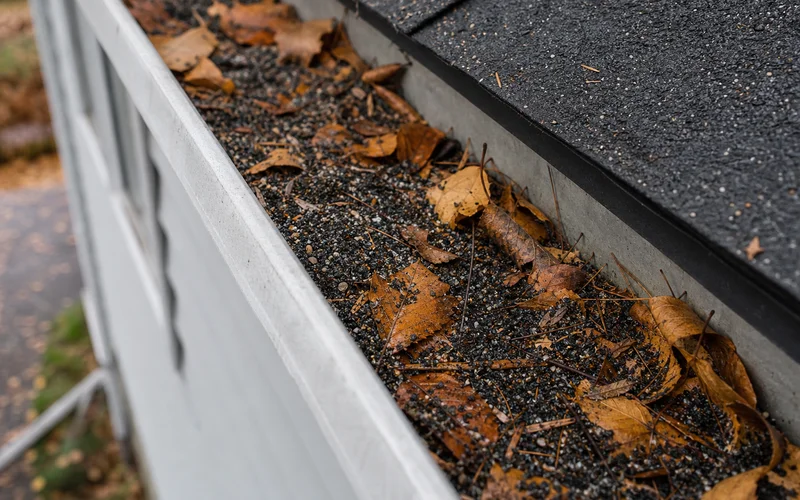
2. Granule Loss in Gutters
Asphalt granules provide essential UV protection and fire resistance for the underlying fiberglass mat. We always check the downspouts during an inspection for this exact reason.
When these small stones wash off, the asphalt itself begins to dry out and degrade rapidly.
A half-bucket of granules in your downspout is the clearest warning sign that your shingles have lost their protective weather resistance.
We expect to see a few small piles of granules during a normal autumn gutter cleaning on a new home. Finding a half-bucket of grit from a single cleaning means your weatherproofing is washing away.
3. Bare Spots on the Field
Exposed fiberglass matting deteriorates quickly under direct sunlight. We notice these dark, worn patches most easily right after a heavy rainstorm.
The field will dry unevenly where the protective granules have worn off completely. Our experience shows that these bare spots expand aggressively over the following year.
The exposed asphalt oils dry out fast, causing the material to crack and break.
4. Daylight Visible in the Attic
Climb into your highest level on a sunny afternoon and turn off the lights. We use this simple trick to locate missing nails and separated plywood sheathing.
Any pinpoint of daylight shining through the deck means water can enter your home just as easily. Check these specific danger zones:
- Around skylight framing
- Near plumbing air vents
- Along the chimney base
We pay special attention to these vulnerable transition points during every evaluation. Trapped moisture from these tiny gaps creates the perfect environment for hidden mold growth.
5. Sagging Rooflines
Connecticut winters pack massive snow loads onto your house, causing weakened framing to bow under the weight. We look at the ridge and eaves from the ground to check for a perfectly straight line.
A visible dip indicates serious structural compromise from waterlogged OSB board or rotted rafters.
Our contractors classify a sagging structure as an urgent emergency well past its expected lifespan. Ignoring a bowed ridge risks a partial structural collapse during the next heavy storm.
6. Interior Ceiling Water Stains
Check your top-floor rooms and exterior walls for brown or yellow discoloration. We know that these ugly marks point directly to active leaks or hidden moisture paths.
Active dripping requires an immediate response to prevent total drywall ruin.
We warn clients that even old, dry stains mean a path exists for water to return soon. Water pooling in your insulation can cost thousands in interior restoration if left ignored.
7. Missing or Lifted Shingles After Wind Events
Connecticut faces 20 to 40 Nor’easters annually, with at least two bringing severe coastal winds. We expect a healthy surface to easily withstand wind gusts up to 70 mph.
Losing tabs during a standard coastal storm means the manufacturer’s adhesive strip has completely failed.
Our repair teams find that when a few pieces blow off, the rest of the field is usually close behind. Wind uplift exploits weakened adhesive, bending the tabs until they snap entirely.
8. Age (The Most Underrated Signal)
Data from the Utah State University Extension shows that aging alone compromises performance around the 15-year mark. We see the harsh New England climate consistently push materials to the shorter end of their warranty spans.
If your architectural asphalt is older than 20 years, or your 3-tab is past 15, failure is imminent.
Our local weather combinations of freeze-thaw cycles, high humidity, and coastal winds simply wear materials down faster. Time takes a toll regardless of how decent the surface looks from your driveway.
When These Signs Mean Repair vs Replace
The average roof replacement cost in Connecticut for a typical 2,000-square-foot home is currently running between $12,000 and $13,500 in 2026. We use this benchmark to help property owners weigh their financial options practically.
Many homeowners ask, should I replace my roof or just patch the leak? A surface under 12 years old with just one or two isolated issues is usually a great repair candidate.
Our honest repair vs replace decision framework relies heavily on the age of the materials and the spread of the damage.
| Roof Age | Visible Damage | Recommended Action |
|---|---|---|
| Under 12 Years | 1-2 Localized Signs | Targeted Repair |
| 12-18 Years | 2-3 Moderate Signs | Comprehensive Inspection |
| Over 18 Years | 3+ Widespread Signs | Full Replacement |
An older structure showing three or more of these red flags demands a full tear-off to meet current 2026 state building codes. We will give you a straight, factual read after a thorough inspection.
If you have five good years left, you will hear exactly that instead of a pushy sales pitch.
What to Do Next
Schedule a free written-estimate inspection if you notice two or more of these warning signs you need a new roof. We will walk the surface, photograph the damage, and check the structural deck from the inside.
See also: How Long Does a Roof Last in Connecticut?.You will receive an itemized, no-pressure estimate outlining your specific needs.
We make sure you have a real, accurate number if a full replacement is truly necessary. Finding out your house is perfectly fine will give you total peace of mind before the next storm season hits.