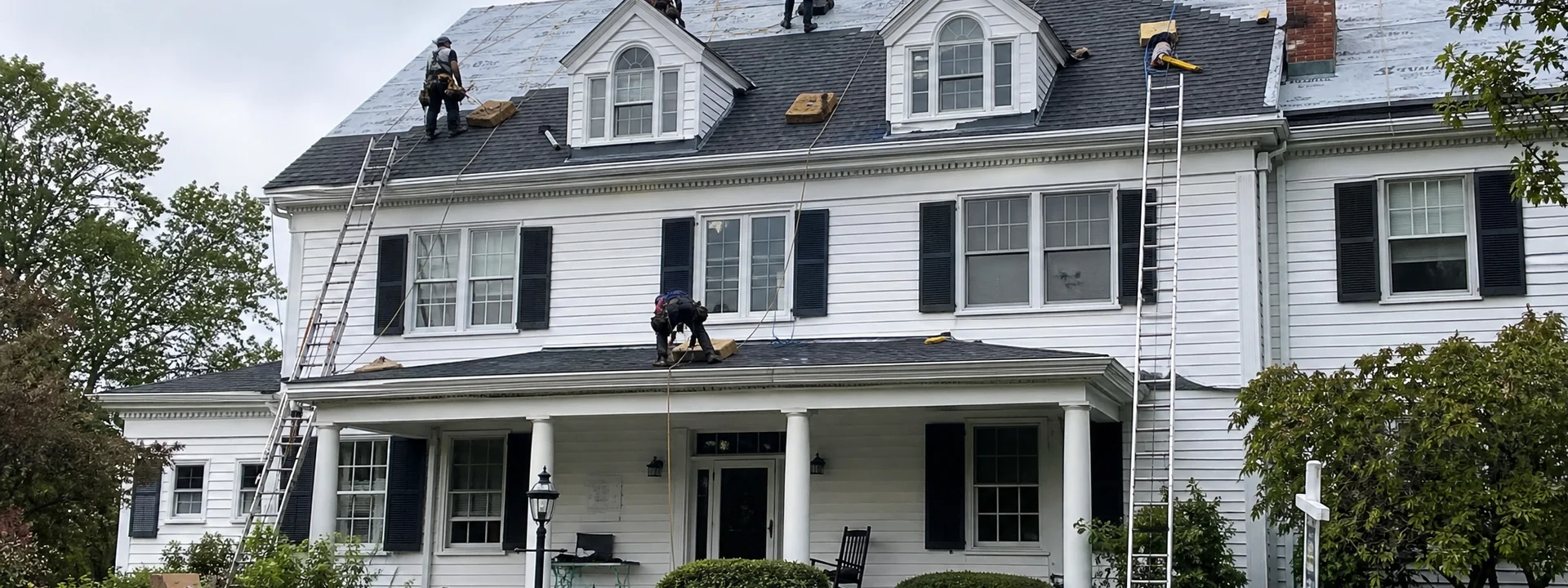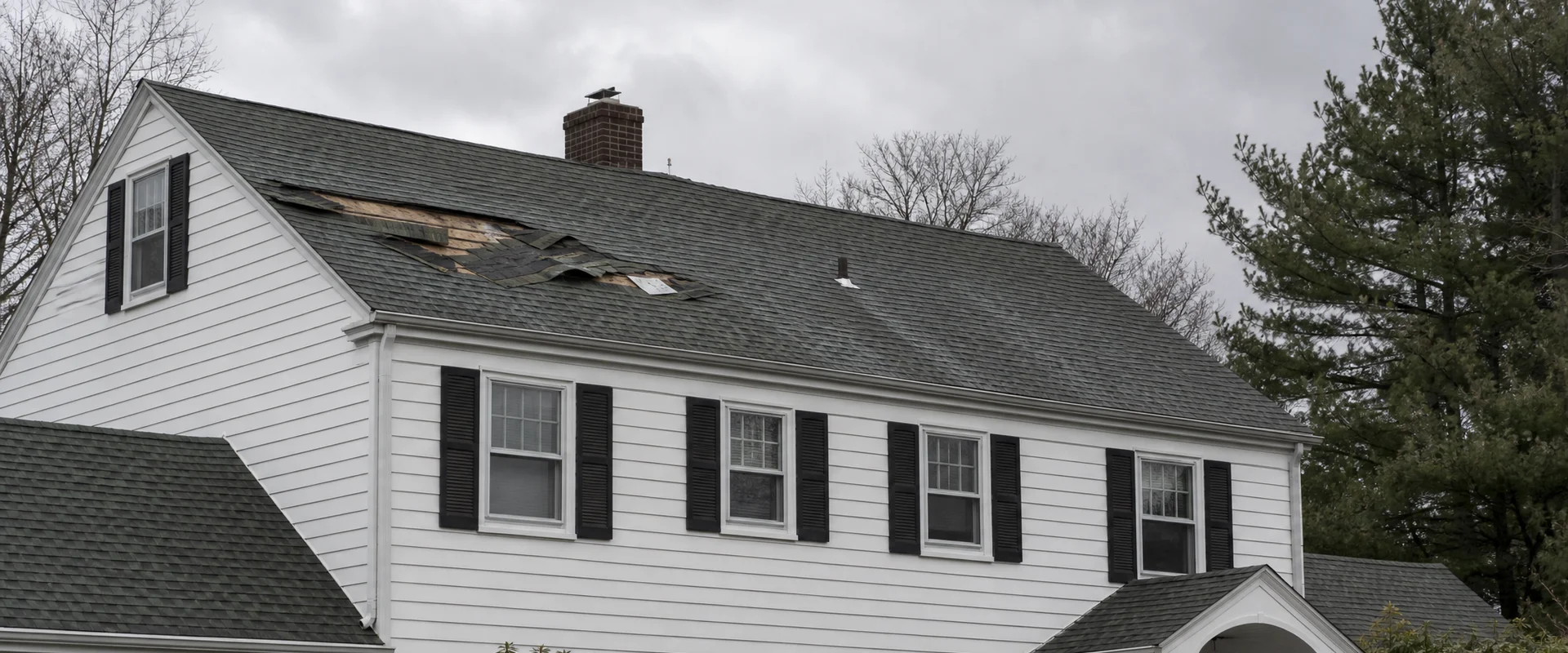
Storm Damage in Connecticut: What Every Job Includes
Connecticut roofs take real punishment from Nor'easters, summer hail, and high-wind events. We provide free post-storm inspections with photo documentation tailored to what insurance adjusters look for — not just a quick walk-around. If active leaking is present, we'll respond fast during office hours (Monday–Friday, 7am–6pm) to tarp the roof and stop secondary damage. From there, you decide whether to file a claim; if you do, we handle the documentation and represent you at the adjuster meeting so legitimately covered damage doesn't get missed.
- Free post-storm roof inspection with photo documentation
- Fast emergency tarping response for active roof leaks
- Insurance-grade damage assessment
- On-site representation at adjuster meetings
- Wind, hail, Nor'easter, and tree-fall damage all handled
- Permanent repair after temporary tarping
Have you ever looked up at your roof after a fierce Connecticut Nor’easter and wondered if it survived the night?
We know exactly how overwhelming that uncertainty can be for local homeowners. It is a stressful feeling to spot a curled shingle or a mysterious leak in your ceiling.
Our team provides professional storm damage repair to help you fix these issues fast. You will learn the exact steps to protect your property and get the coverage you deserve.
Let us walk through this simple process together.
What Counts as Storm Damage
Storm damage has a wide definition under most Connecticut homeowner policies. We often see adjusters evaluate claims based on “sudden causation” rather than just the age of the roof. Even a 15-year-old roof can get fully approved if you can prove a specific weather event caused the problem. Our documentation focuses on proving this sudden impact to satisfy standard policies from carriers like Travelers or The Hartford.
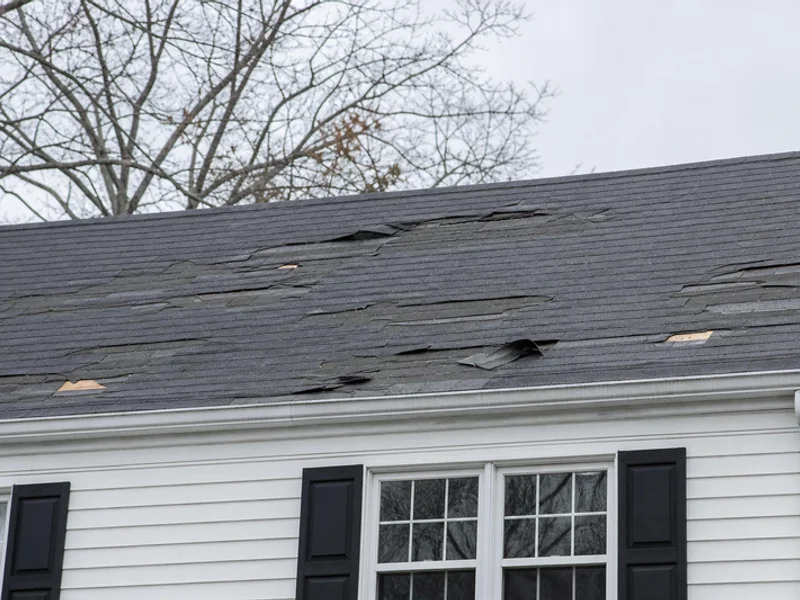
Wind damage typically shows up as lifted, creased, or missing shingles. We watch for sustained gusts over the usual 50 mph threshold, though recent Nor’easters have easily topped 60 mph across the state. These severe winds combine with heavy precipitation that finds any compromised flashing or valley. Our inspectors know exactly what insurance adjusters need to see to approve a claim.
Common Signs of Sudden Impact
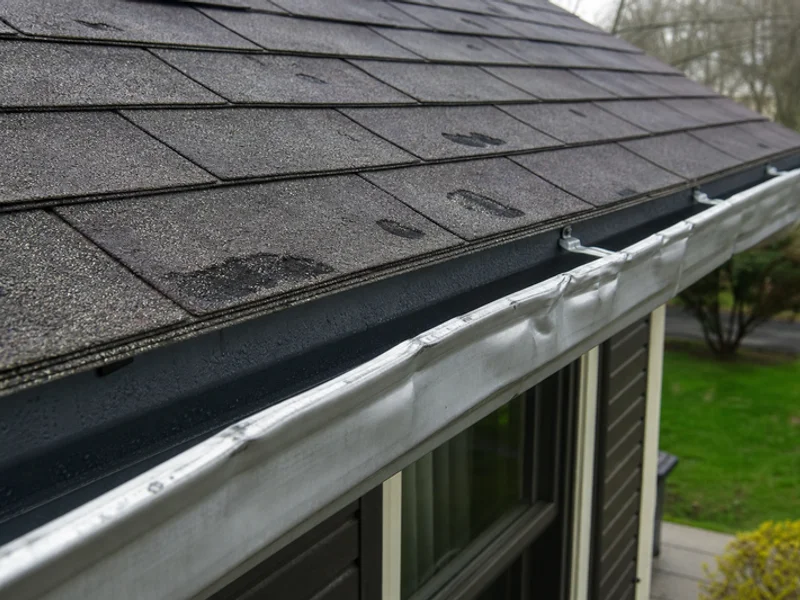
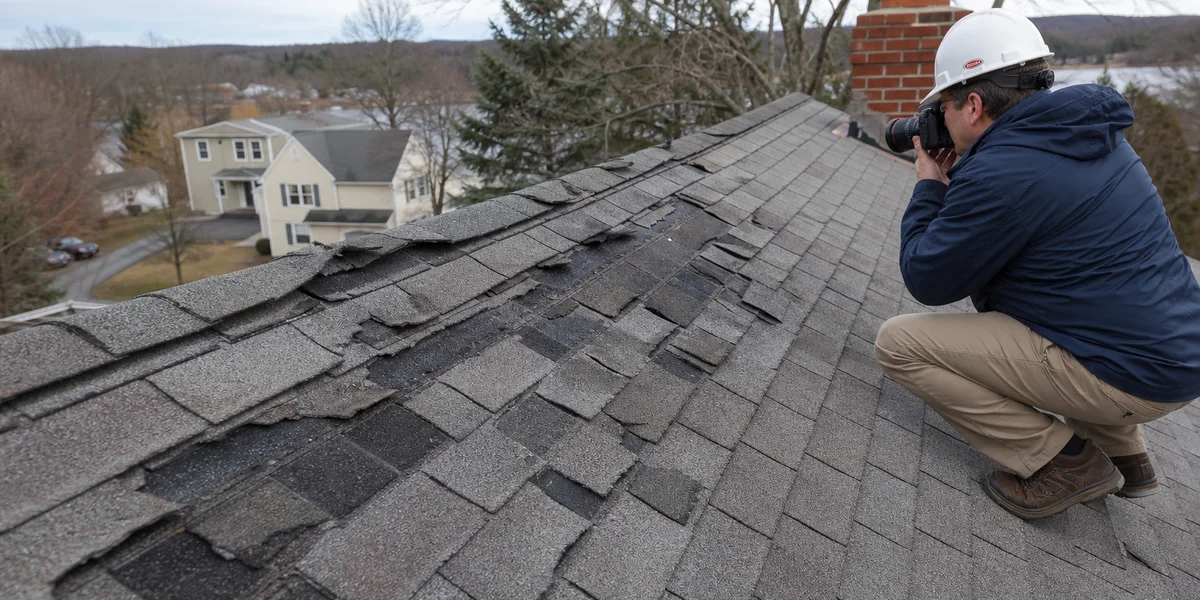
Hail damage leaves very specific marks that require a trained eye to spot. We look for circular bruise marks on shingles and major granule displacement from impact points. Dented soft metals, like gutters, vents, and flashing, are also clear indicators of hail strikes. Our crews thoroughly document these details because insurance companies sometimes try to dismiss them as cosmetic issues rather than functional loss.
Tree-fall and fallen-debris damage are usually covered under your standard policy as well. We coordinate the entire process when a whole-tree-down event requires other trades like tree removal or structural framing. A coordinated approach makes the restoration process much smoother for you.
Our Inspection Process
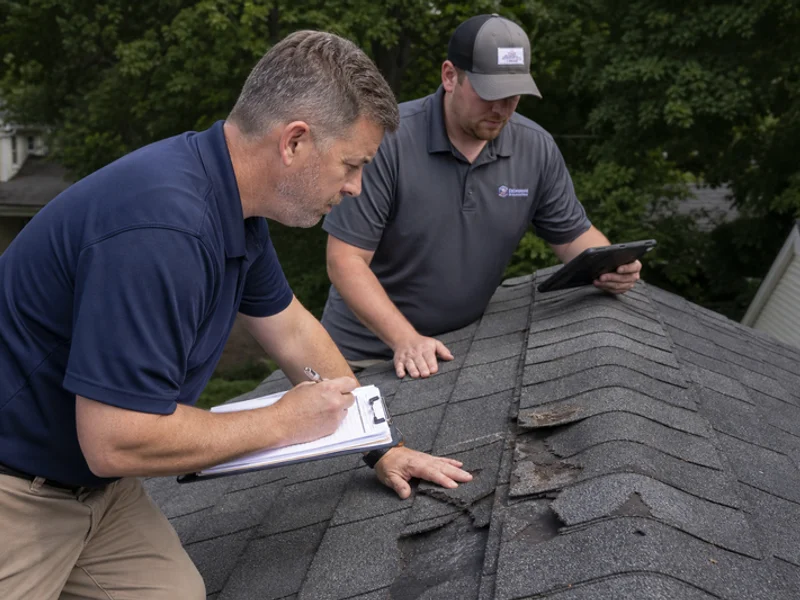
A free post-storm inspection takes 30-45 minutes for a typical residential roof. We walk the roof only when it is safe, avoiding icy or actively wet surfaces entirely. Your written summary arrives the exact same day or the morning after our visit. We also inspect the attic from below to find hidden moisture before it turns into dangerous mold.
Standard roofers often do a quick exterior walk-around, but that is rarely enough to get a claim approved. We build our photo documentation around the exact evidence your adjuster needs to authorize coverage. This level of detail often decides whether legitimately covered damage gets paid. Our experts format all findings to align with Xactimate, the industry-standard software that almost all insurance adjusters use to calculate repair costs.
How We Find the Hidden Problems
The difference between a denied claim and a new roof usually comes down to the quality of the inspection. We check flashing details at chimneys and dormers where leaks often begin unnoticed. Granule accumulation in gutters is another critical detail that must be photographed at the specific elevation and distance an adjuster requires. Our thorough approach ensures no valid damage is left off the report.
Comparing Inspection Styles
Understanding the difference in inspection methods can save you a lot of frustration. We designed our process to bridge the gap between a contractor’s estimate and an insurance adjuster’s requirements.
| Feature | Typical Roofing Estimate | Our Insurance-Focused Inspection |
|---|---|---|
| Focus | Quoting a replacement price | Proving functional storm damage |
| Documentation | Basic wide-angle photos | Close-up impact photos formatted for adjusters |
| Attic Check | Rarely included | Mandatory check for hidden water intrusion |
| Software | Basic spreadsheets | Aligns with Xactimate industry standards |
Emergency Tarping: Fast Response for Active Leaks
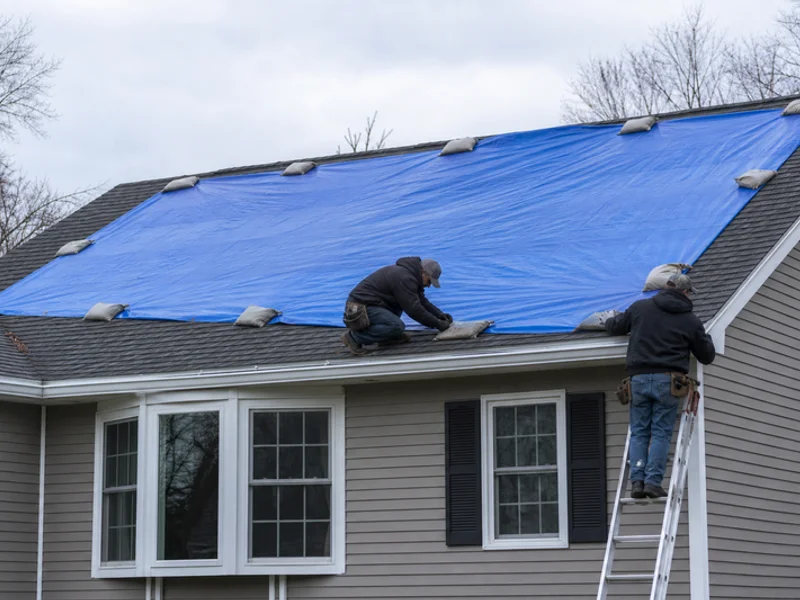
Active leaks are not a situation where you have time for a slow decision. We dispatch a tarp crew as soon as one is free during our Monday–Friday 7am–6pm office hours, and we respond to active-leak emergencies as quickly as possible. Simply dial (203) 824-0275 to get help for your property. Our team installs the covering securely to buy you 30-60 days of weather protection while the permanent repair or replacement is scheduled.
Many homeowners do not realize that emergency tarping is usually fully reimbursable under the “Reasonable Repairs” clause of standard policies. We secure the tarp with proper edge nailing under the shingle line above the damage, rather than doing a cheap staple-the-corners job that fails on the next gust. Failing to mitigate further water damage can actually give the insurance company a reason to deny your interior claims later due to “neglect.” Our professional installation prevents those secondary issues completely.
Steps to Handle an Active Leak
Taking the right steps immediately can protect your interior ceilings, drywall, and hardwood floors. We recommend following a specific order of operations when water is entering your home.
- Move your valuables: Push furniture away from the dripping water immediately.
- Catch the water: Place large buckets or plastic bins under the active drips.
- Call for emergency tarping: Contact us at (203) 824-0275 to seal the roof exterior.
- Save your receipts: Keep all documentation, as your insurance will likely reimburse these mitigation costs.
- Document the interior: Take photos of the water stains on your ceiling before they dry.
Dealing with sudden property damage is never a fun experience for anyone. We are here to make the recovery process as simple and stress-free as possible.
Professional storm damage repair is just a phone call away.
Our experts will handle the inspections, document the evidence, and secure your home against the elements. Reach out today to schedule your free evaluation.