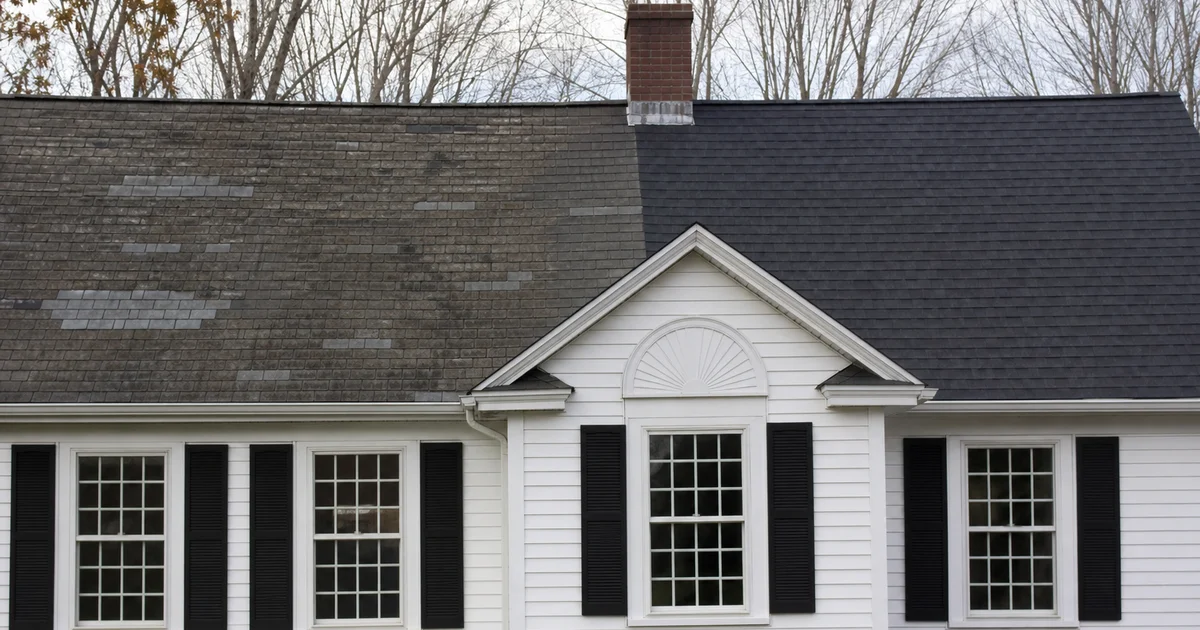
We often see homeowners struggling to figure out if a minor leak means a quick patch or a major project. “Should I repair or replace my roof?” is the most common question we hear after a major storm.
This hesitation is completely understandable. You want to protect your property, but nobody wants to spend fifteen thousand dollars prematurely.
Our team relies on specific, data-driven formulas to evaluate storm damage and aging materials.
The process starts by breaking down the exact roof replacement vs repair math so you can make an informed choice.
The Honest Decision Framework
The choice to repair or replace your roof comes down to three variables. Get your age, damage extent, and failure pattern calibrated correctly, and the answer is usually clear.
Hitting your specific roof repair threshold depends heavily on local climate factors.
Age threshold: Under 12 years on architectural asphalt, repair is the default. Connecticut’s extreme freeze-thaw cycles aggressively age materials, so over 18 years, replacement is the default. The 12-18 year band is where the other factors decide.
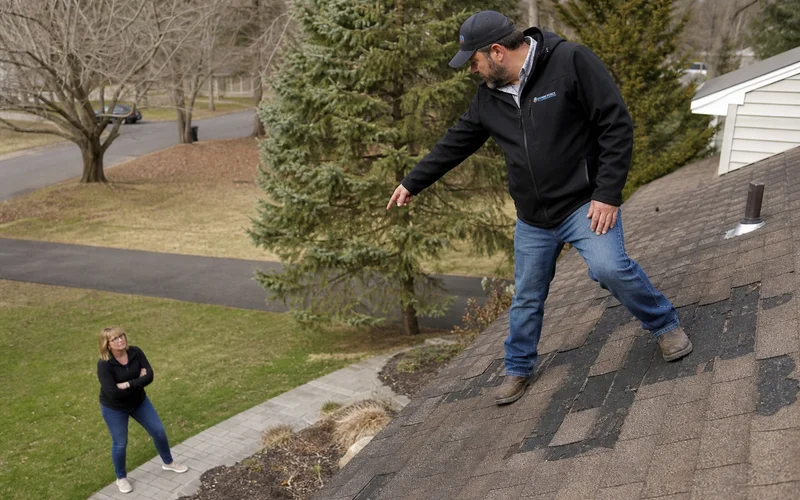
Damage extent threshold: Below 25-30% of the field showing wear or damage, repair is feasible. Above 30%, the surrounding shingles are close to failure, and patching delays the inevitable.
Failure pattern: Localized damage from a specific event (like wind tearing shingles off one slope) is a repair. Distributed damage across multiple slopes (curling on the north, granule loss on the south, lifting at the ridge) signals end-of-life and a replacement.
The 5-10 Year Cost Horizon
Let’s look at the math that decides borderline cases. Recent 2026 data shows the average cost of a new asphalt roof in Connecticut ranges between $12,000 and $16,000.
On a 17-year-old roof showing scattered curling and one previous storm-damage repair, the financial picture becomes very clear.
| Financial Variable | Option A: Repair Now | Option B: Replace Now |
|---|---|---|
| Immediate Action | Patch the new damage ($1,200) | Full installation ($12,500) |
| Future Obligation | Replacement in 3-5 years ($14,500 with inflation) | No major costs for 20+ years |
| Total 5-Year Cost | $15,700 | $12,500 |
Replacement wins on math whenever the existing roof has less than 5 years of remaining life. Under that threshold, repair money is short-term spending that you will never see again.
When Repair Is the Right Call
The cases where we recommend repair, not replacement, follow strict guidelines. High-quality shingle brands like GAF or Owens Corning usually hold up exceptionally well in their first decade. See also: Signs Your Roof Needs to Be Replaced.
We evaluate the underlying structural integrity before suggesting any minor work.
- Localized storm damage on a roof under 12 years old. Lifted shingles from a recent 50 mph Nor’easter on an otherwise sound roof are easy to swap out.
- Single flashing failure. A chimney step flashing or vent boot that has failed in isolation while the field shingles are fine.
- Valley leak on a moderate-age roof. This is often a flashing reset rather than a full tear-off.
- Roof under 5 years old with any localized damage. Repairing a defect under warranty is almost always the right move.
A repair under these conditions typically runs $350 to $2,500 depending on access and scope. Our estimators quote them honestly when the math supports fixing the issue.
When Replacement Is the Honest Call
The cases where repair is throwing good money after bad require a completely different approach. Delaying the inevitable often leads to interior water damage.
- Roof over 20 years on architectural asphalt with any new damage. The next failure is likely months away.
- Multiple slopes showing end-of-life signs. Distributed wear means systemic age, not a localized event.
- Decking issues alongside shingle damage. If the underlying wood sheathing is compromised, you need a full tear-off to address the rot properly.
- Insurance claim involving 25%+ slope replacement. When insurance approves a significant partial replacement, upgrading to a full replacement is usually a small marginal cost relative to the value.
- Buyer disclosure timing. If you plan to sell within 24 months and the roof is past 18 years, replacement is almost always a positive ROI on resale.
A 2026 market analysis shows that a new asphalt roof in the Northeast yields a 60% to 70% return on investment upon resale. Homes with aging roofs often sit on the market longer and face brutal price reductions after inspections.
The Insurance Wrinkle
Insurance treats partial-slope replacement differently than full replacement. If an adjuster approves replacing one slope but not the others, you get a roof that is two different ages.
The visual mismatch alone can drop resale value, and the maintenance schedule becomes split.
Connecticut Matching Laws
Our state has specific legal protections for property owners facing this exact situation. Connecticut General Statute Section 38a-316e requires insurers to replace adjacent items to conform to a “reasonably uniform appearance” if new materials do not match the old ones.
This matching law is a powerful financial tool for property owners.
Managing the Claims Process
Handling an insurance dispute requires strict attention to detail and clear documentation. If a carrier denies a full replacement based on coverage, a 2022 Connecticut Supreme Court ruling (Klass v. Liberty Mutual) established your right to use an independent appraisal panel to resolve matching disputes.
When we provide insurance claim assistance, we evaluate whether the adjuster’s partial scope leaves you in a worse position. Often, a supplement conversation resolves to a full replacement, with the homeowner paying just the depreciation on the additional slopes.
How We Make the Call
During a free inspection, we will give you a straight answer regarding the patch vs replace roof debate. This includes showing you the actual math behind the recommendation.
If the honest answer is that you have five more years, we will tell you to call us back in 2031. If the cost of three more repairs over the next 24 months will exceed a replacement today, our estimators will break down those numbers for you.
That is the radical honesty model in practice. We make money on either repair or replacement. Building a lifetime customer by giving you the honest answer either way is our primary goal. Contact us today to schedule your comprehensive evaluation.