We inspect hundreds of homes each year as a professional roofing service team. The asphalt shingle problems Connecticut property owners face follow a predictable pattern. For the full scope of work behind this guide, see our asphalt shingles service.
Our crews regularly observe how a 15-year-old roof in New England ages much faster than one in a mild climate. This accelerated wear comes directly from constant weather shifts.
We will examine the hard data behind these common shingle failure types below.
You can then explore the most practical ways to protect your property.
The Eight Most Common Asphalt Shingle Problems
We consistently find that most local roofs show distinct failure signs between years 12 and 15. Spotting these shingle damage signs early is the difference between a minor repair and a total replacement.
Our inspectors monitor eight specific issues to gauge the remaining life of your shingles. The following sections break down exactly what to look for.
1. Curling, Cupping, or Clawing
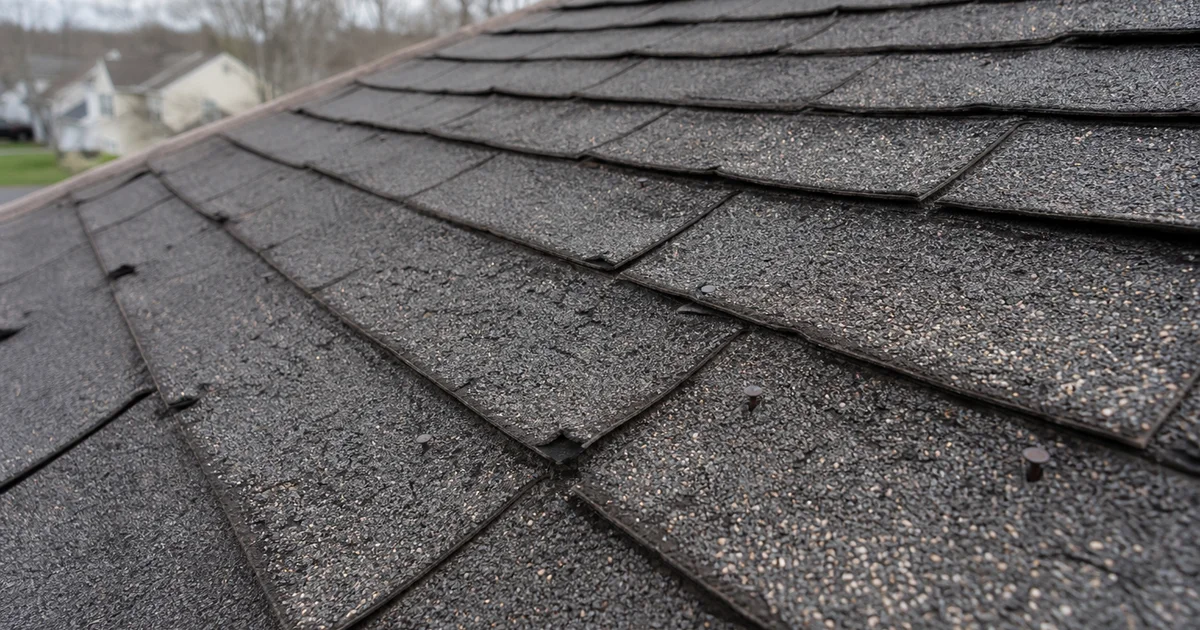
Shingles losing their bond to the roof deck will physically distort. The corners lift up, the center sinks down, or the edges flare out.
Our team often traces this distortion back to poor attic ventilation trapping intense summer heat. Connecticut building codes require specific intake and exhaust ventilation ratios to prevent this exact issue.
Baked asphalt simply dries out and curls due to three main factors:
- Inadequate Ventilation: Trapped heat bakes the shingle from underneath.
- UV Degradation: Direct sun exposure dries out the asphalt core over time.
- Natural Aging: The factory adhesives naturally degrade after 15 to 20 years.
You can usually spot this severe distortion right from your driveway.
2. Granule Loss
Those rough, colored granules on your shingles act as essential sunscreen for the asphalt mat beneath. Your roof degrades at a much faster rate once they wash away.
We expect to see minor granule shedding during a new installation or after a major 60-mph storm. Consistent, heavy accumulation in your gutters is a different story.
Finding piles of granules near your downspouts signals severe UV degradation.
3. Blistering
Small bubbles or blisters on the shingle face will eventually pop and expose the dark asphalt underneath. This happens when moisture or air gets trapped inside the material during the manufacturing process.
Our repair technicians frequently see homeowners confuse these popped blisters with hail damage. Hail impacts leave distinct, pushed-in dents on the mat.
Blisters push outward and break the surface from the inside. While it starts as a cosmetic flaw, blistering quickly accelerates granule loss.
4. Missing or Lifted Shingles
High wind events easily lift shingles that have weakened sealant strips. A single severe thunderstorm can compromise an entire roof slope.
We strongly advise securing missing shingles within 48 hours to prevent serious water infiltration. A lifted shingle might look fine from the ground, but its factory seal is permanently broken.
Our crews often upgrade homes to high-quality architectural options with reinforced nailing zones, such as Owens Corning Duration shingles. These modern materials can resist wind gusts up to 130 mph.
5. Nail Pops
Decking movement forces nail heads to push up through the shingle surface. This creates small, visible bumps across the roof field.
Our inspections reveal this issue constantly on older Hartford County homes built between the 1950s and 1980s. The original plank decking expands and contracts with thermal changes, backing the nails out.
Every single nail pop breaks the watertight seal and causes a chain reaction:
- Small leaks enter the attic space slowly.
- Surrounding shingles lift and lose their wind resistance.
- Moisture rots the underlying plywood deck over time.
6. Algae Streaks (Dark Stains)
Long vertical streaks of dark green or black algae often coat north-facing roof slopes. The Gloeocapsa magma bacteria thrives in our humid Connecticut climate.
We find that these stains are mostly cosmetic during the first few years. The bacteria feeds on the limestone filler inside older, non-resistant shingles.
Modern algae-resistant products, like the GAF Timberline HDZ line, feature specialized copper granules to stop this growth entirely.
7. Flashing Failures
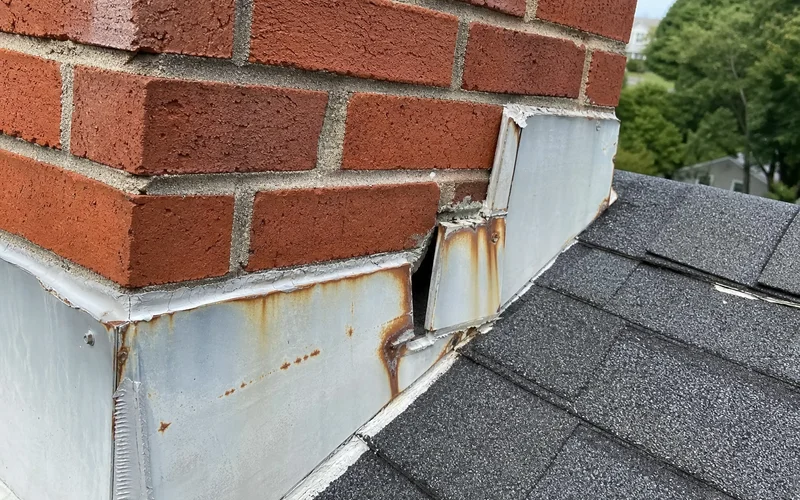
The metal transition pieces around your chimney, dormers, and valleys frequently fail long before the actual shingles do. Rusted metal or separated caulk lines are the single most common leak source on otherwise healthy roofs.
Our daily service logs show that chimney flashing causes more interior water damage than any other roof defect.
Proper code compliance requires a two-part system of step flashing interwoven with the shingles, covered by custom-cut counter-flashing.
8. Ice-Dam Damage at Eaves
Water staining in your attic or along the exterior eaves points directly to past ice-dam infiltration. Snow melts higher up the roof and refreezes at the colder edge, creating a solid wall of ice.
We see the resulting trapped water push backward under the shingles and destroy the underlayment. Connecticut building codes now require a waterproof ice and water shield installed at least 24 inches inside the warm exterior wall line.
Never attack an active ice dam with a hammer or hatchet. Safe solutions include:
- Professional low-pressure steam removal.
- Improving attic floor insulation to stop heat loss.
- Clearing soffit intake vents to keep the roof deck cold.
What Each Problem Tells You About Roof Age
Evaluating these common roof problems in CT helps you predict your timeline for a replacement. The overall pattern of damage matters far more than any isolated issue.
We use these visual clues to place your roof into one of three distinct life stages. A single nail pop on a 10-year-old roof might just require a simple $200 maintenance visit. Finding multiple issues across different slopes means piecemeal patch jobs are a waste of money.
Recent 2026 market data shows the average roof replacement cost in Connecticut ranges from $9,700 to $18,400. You need accurate information to plan for that kind of investment.
| Problems Present | Likely Roof Status | Action Required |
|---|---|---|
| Localized flashing failure, otherwise sound shingles | Repair candidate, roof has remaining life | Reseal or replace specific metal transition |
| Some granule loss, occasional nail pops | Mid-life roof (12-18 years) | Monitor annually, budget for future work |
| Curling on one slope, algae streaks, granule piles | Approaching end-of-life (18-22 years) | Schedule quotes for replacement |
| Multiple problems on multiple slopes | End-of-life (roof replacement needed) | Immediate replacement to stop leaks |
Why Hartford County Sees These Problems
Our local environment destroys exterior building materials faster than almost any other region. Three specific factors drive higher failure rates in Connecticut than in southern states. See also: Architectural vs 3-Tab Asphalt Shingles.
We know that a standard 3-tab asphalt shingle rated for 25 years might only survive 15 to 18 years here. This regional penalty is driven by:
- Freeze-Thaw Cycles: Rapid temperature swings stress the shingle core 40 to 60 times every winter.
- Trapped Humidity: Sticky summer air fuels rapid algae growth on shaded roof sections.
- Ice-Dam Exposure: Repeated winter snow buildup degrades eave underlayments over multiple seasons.
- Aging Installs: A massive wave of local housing stock with original early-2000s installations is reaching its natural end-of-life right now.
These are not manufacturing defects or poor workmanship issues. They represent the normal, expected aging pattern of an asphalt roof exposed to New England weather.
What to Do Next
Knowing these warning signs allows you to act before an active leak ruins your interior ceilings. You have options if you spot two or more of these common issues on your property.
We recommend scheduling a free written estimate to get an accurate baseline of your roof’s health. A trained inspector will walk the property, document every finding with clear photos, and provide an honest assessment.
You will receive the hard facts about whether you need a minor repair, a partial fix, or a full replacement. No high-pressure sales tactics are allowed. We will gladly tell you if your roof still has five good years left.