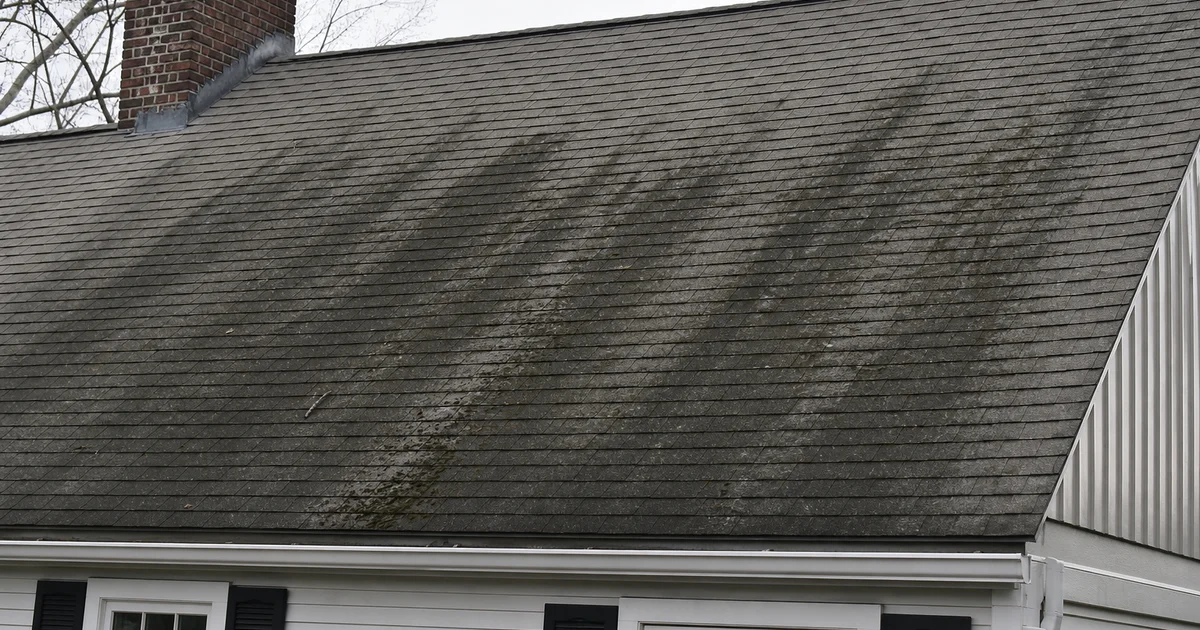
We talk to property owners every day who assume the black streaks on shingles are just accumulated soot or dirt. The reality is entirely different, and usually much easier to solve. For the full scope of work behind this guide, see our asphalt shingles service.
Our team has found that understanding what these dark marks actually are is the first critical step to saving thousands of dollars.
Let’s break down exactly what causes this common Connecticut roofing issue and explore the most effective ways to treat it.
What Causes the Dark Streaks
We often find that customers are surprised to learn these dark stains are actually alive. Those unsightly marks running down Connecticut homes indicate a Gloeocapsa magma roof infestation, an airborne cyanobacteria that travels like dandelion seeds from neighborhood to neighborhood on the wind.
It actively feeds on the calcium carbonate found in the limestone filler of modern asphalt materials. Our crews regularly see this organism thriving in humid Northeastern climates because manufacturers increased limestone usage over the last few decades to replace expensive oils.
The bacteria itself is naturally blue-green, but it builds a dark protective sheath to shield itself from ultraviolet rays. This biological process creates several distinct patterns on your property:
- Vertical black lines: These are simply layers of dead and accumulated cells that have been weathered by heavy rain.
- North-facing colonization: Connecticut’s typical humidity makes this growth incredibly common on slopes that stay damp longer.
- Timeline progression: Faint discolorations typically emerge around year six to eight before becoming highly prominent by year twelve or fifteen.
Our roofers always remind clients that this is an operational issue as well as an aesthetic one. The dark sheath absorbs excess heat, which can make the affected shingles run 10 to 15 degrees hotter and accelerate thermal wear.
Cosmetic or Damaging?
We consider algae roof streaks primarily a cosmetic concern during the early stages of a shingle’s life. The cyanobacteria itself doesn’t puncture the structure or immediately cause indoor leaks. That said, unchecked heavy growth holds moisture against the surface and slowly accelerates granule loss over a multi-decade timeline.
Our team sees a much more immediate and measurable issue when evaluating property resale value. Real estate agents consistently warn that heavy algae streaking signals an “old roof” to prospective buyers, even if the shingles have plenty of remaining service life.
To illustrate how the impact shifts over time, consider this breakdown:
| Roof Age | Primary Algae Impact | Financial Consequence |
|---|---|---|
| 1 to 5 Years | Spores land and begin feeding invisibly. | None. |
| 6 to 10 Years | Faint streaks appear on north-facing slopes. | Minor curb appeal reduction. |
| 11 to 15+ Years | Heavy dark staining across multiple planes. | 5% to 10% drop in perceived property value. |
Recent 2026 guidelines from the National Association of Realtors confirm that these stained roofs routinely reduce a home’s perceived value by 5% to 10%. For a typical $400,000 Connecticut home, that visual blemish translates to a potential $20,000 to $40,000 drop in equity.
We know that a roof that is mechanically sound but heavily streaked frequently triggers lowball offers. Buyers will almost always demand thousands of dollars in concessions during closing negotiations to address the ugly stains.
Prevention vs Treatment
We always tell homeowners that stopping algae before it starts is significantly easier than cleaning it later. Depending on where you are in your roof’s lifecycle, you have three primary options to handle this problem.
Proactive Prevention Strategies
Installing algae-resistant shingles is the best strategy when you are already planning a full replacement. Modern architectural options from brands like GAF, Owens Corning, and CertainTeed all include specialized copper granules engineered directly into the mat.
Our crews highly recommend utilizing advanced systems like GAF’s Timberline HDZ or UHDZ lines. These specific products feature Time-Release Algae-Fighting Technology, which utilizes thousands of copper microsites to slowly release protective ions during rainstorms.
This constant chemical release is so effective that GAF now offers a 25-year StainGuard Plus warranty, ensuring decades of protection.
Installing Metal Roof Strips
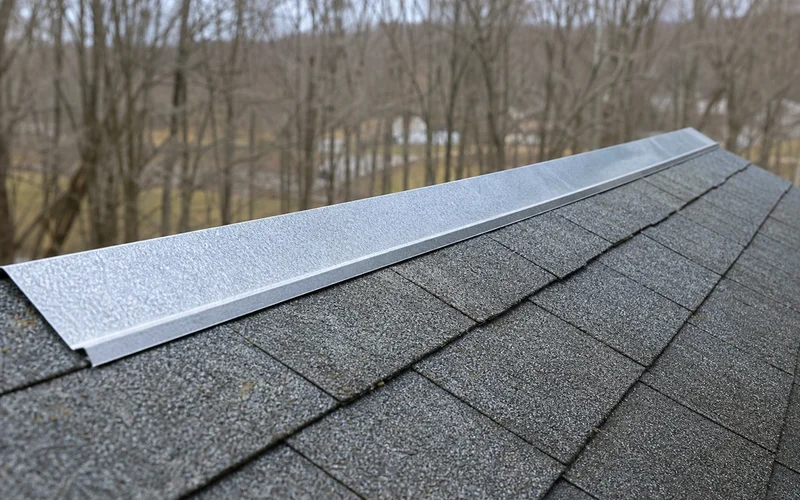
We frequently install strips of zinc or copper along the ridge of existing roofs that are still in good condition. This targeted metal slowly releases trace ions when rain washes down the slope, naturally inhibiting any new spores from taking root.
The application is highly effective on both brand-new and older installations. Costs remain very modest, typically ranging from $200 to $500, and the reliable protection lasts 15 to 20 years before the metal oxidizes completely.
Professional Soft-Wash Treatments
Our technicians can safely remove existing algae using a specialized soft-wash treatment paired with a roof-specific cleaning solution. This process relies on chemistry rather than mechanical force to achieve results.
The Asphalt Roofing Manufacturers Association explicitly guidelines the use of sodium hypochlorite mixed with a clinging surfactant for this exact job. This potent, low-pressure chemical application completely kills the bacteria down to the root and gently rinses the dead cells away.
We typically see costs run between $400 and $900 for a standard residential property. The treatment restores the original color almost immediately and keeps the surface clear for four to six years.
What Not to Do
We see a lot of well-intentioned DIY efforts turn into expensive disasters. If you decide to tackle those shingle stains, you must avoid these three common and highly destructive mistakes:
- Using a pressure washer. High-velocity water blasts away the protective ceramic granules, instantly voids your manufacturer warranties, and severely damages the underlayment. The Asphalt Roofing Manufacturers Association explicitly warns that you should never pressure-wash an asphalt surface.
- Applying concentrated DIY bleach mixtures. Pool-grade chlorine kills algae, but excessive run-off will scorch the landscaping below your eaves and quickly corrode your aluminum flashing. If you need a chemical treatment, hire a certified professional equipped with proper collection and containment systems.
- Walking the surface aggressively. Foot traffic on damp, streaked shingles often causes severe friction damage. Dislodging granules with heavy boots is usually worse for the structural integrity than the actual bacterial growth.
When Streaks Indicate Other Problems
While surface algae is primarily an ugly annoyance, it can sometimes camouflage much deeper structural failures. You should pay close attention to the overall condition of the materials beneath the stains.
Our inspectors use specific warning signs to determine if a dirty system is actually a failing one. Watch out for these critical combinations:
- North-slope streaks combined with widespread curling: This dual symptom indicates the entire north slope is aged, brittle, and rapidly approaching its absolute end-of-life.
- Dark stains alongside heavy granule loss: Bald spots show that UV degradation has progressed significantly beyond what simple bacterial growth would cause.
- Visible algae matched with active interior leaks: This immediately points to a compromised membrane or failed flashing, as cyanobacteria cannot punch holes through shingles on its own.
We always advise property owners to seek a professional evaluation when multiple symptoms overlap. If you’re seeing streaks alongside other common shingle problems, the roof has definitely earned a much closer look.
Bottom Line
Algae streaks alone are rarely a structural emergency for your property.
If the installation is under 12 years old, a professional soft-wash treatment paired with a zinc strip installation usually restores the curb appeal for under $1,000. If the system is older than 15 years and the stains are accompanied by curling or bald spots, the financial math changes completely.
Our experience shows it is usually more cost-effective to plan a full replacement with algae-resistant shingles rather than treating a temporary symptom. Reach out to a local roofing expert today to schedule a comprehensive inspection and find out exactly which solution is right for your home.