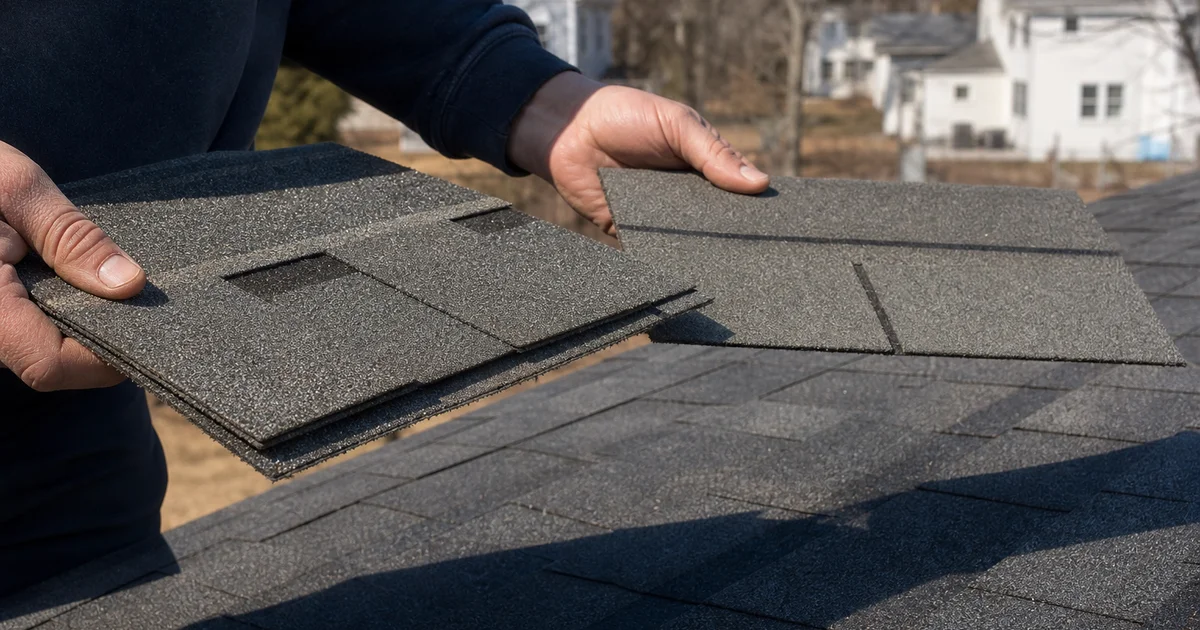
You know how a strong Nor’easter immediately exposes the weak points on an aging roof.
Our crews inspect hundreds of these damaged properties every season. The failures almost always trace back to outdated materials snapping under pressure. A 60 mile-per-hour wind rating simply does not cut it anymore.
We will break down the 2026 performance data for architectural vs 3-tab shingles to show you exactly what works. Let us look at the facts and explore a few practical ways to respond before the next storm hits.
The Two Asphalt Shingle Categories
The two main categories of asphalt shingles are basic 3-tab and layered architectural profiles. Our preferred choice is the architectural style because it provides double the wind resistance of a standard 3-tab product.
“The roofing industry shifted dramatically over the last decade, with single-layer products rapidly losing ground to thicker, storm-resistant profiles.”
3-tab shingles are flat, single-layer strips with three cut tabs across the exposed face. They are lightweight at about 200 pounds per square and produce a very flat-textured roof. Manufacturers like Owens Corning actually began phasing out their Supreme 3-tab lines in select markets in early 2025.
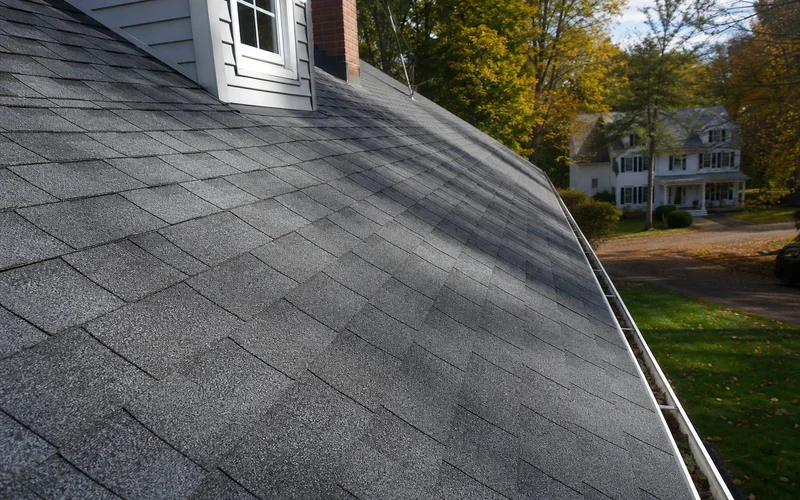
Architectural shingles (also called dimensional or laminated shingles) use two or more glued layers to create a thicker appearance that mimics slate or wood shake. We recommend these heavier products, which weigh between 240 and 340 pounds per square, as the modern residential default. This category now commands nearly 80% of the United States residential market in 2026, providing critical protection against heavy rain.
Side-by-Side Comparison
With these shingle types compared directly, the dimensional option provides a 130 mph wind rating and a 50-year warranty, while 3-tab maxes out at 60 mph and 25 years. We update this data annually to reflect the latest manufacturer specifications.
| Factor | 3-Tab Shingles | Architectural Shingles |
|---|---|---|
| Profile | Flat single-layer | Dimensional layered |
| Weight per square | ~200 lbs | 240-340 lbs |
| 2026 Market Share | Under 15% | Nearly 80% |
| Wind rating | ~60 mph | 110-130 mph |
| Installed Cost (CT) | $350-$550 per square | $450-$850 per square |
| Typical lifespan (CT) | 12-18 years | 20-25 years |
| Manufacturer warranty | 20-25 years | 30-50 years |
| Impact resistance | Class A | Class A (Some Class 4) |
The cost premium is modest compared to the massive upgrade in durability. A standard 2,000-square-foot roof requires about 20 squares of material, adding roughly $2,000 to the total project cost in 2026.
Our installers see this upgrade pay for itself during the very first severe weather event. Buyers actively look for dimensional roofs, making the resale value much higher.
Why Architectural Won Connecticut
Architectural shingles dominate Connecticut because their 130 mph wind resistance easily handles severe coastal storms and Nor’easters. We see these heavier materials consistently outlast older single-layer designs. Three main factors caused the residential market to abandon flat profiles entirely. See also: Algae Streaks and Dark Stains on Asphalt Shingles.
- Strict Building Codes and Wind Performance: A 60 mph rating simply fails to meet the 2022 Connecticut State Building Code requirements for coastal wind zones. The 110 to 130 mph rating of dimensional products handles the worst regular weather events with ease.
- Lifespan Economics: Getting an extra decade of service for a small 20% cost premium creates a highly favorable life-cycle cost.
- Curb Appeal and Resale: Real estate listings frequently highlight a dimensional roof as a primary selling feature. The return on investment for owner-occupied homes routinely exceeds the initial upgrade cost.
For property owners evaluating architectural shingles CT options, this heavier material is the only logical recommendation. We primarily install GAF Timberline HDZ, Owens Corning TruDefinition Duration, and CertainTeed Landmark lines. These specific brands feature advanced nailing strips that guarantee maximum hold during high winds.
When 3-Tab Still Makes Sense
Basic 3-tab shingles only make sense for unheated outbuildings, short-term investment flips, or strict historic district requirements. Our team rarely recommends them for a primary residence due to their poor wind resistance. The older style is not completely extinct just yet.
- Outbuildings and sheds: A small 2-square tool shed saves a few hundred dollars using basic materials, making it an acceptable budget choice.
- Short-term investment properties: House flippers sometimes use the minimum acceptable specification to pass an inspection.
- Historic-district homes: Certain architectural review boards occasionally require period-appropriate flat profiles to match older aesthetics.
- Re-cover layers: Local codes sometimes permit a thin re-cover over an existing layer, where the lighter 200-pound weight is necessary to avoid structural strain.
When evaluating dimensional vs 3-tab performance for a primary home, the math clearly favors the thicker option. A severe storm will easily peel back the single-layer tabs. We strongly advise clients to avoid this material unless they are roofing a detached structure.
Architectural Sub-Categories
The architectural shingle category features three distinct sub-tiers based on thickness, design, and warranty length. We guide homeowners through these specific choices during the initial estimate phase. Manufacturers segment their products to fit different architectural styles and weather threats.
Standard Architectural Options
The mainstream choice for most Connecticut homes costs around $450 to $600 per square. Popular models like the GAF Timberline HDZ feature proprietary LayerLock technology, which physically bonds the shingle layers together for enhanced wind uplift resistance. We install this specific tier on the vast majority of standard suburban homes.
Designer Architectural Upgrades
Designer lines offer larger profiles, deeper shadow lines, and slate-mimicking colors for roughly $600 to $750 per square. Examples like Owens Corning Duration Designer look spectacular on high-end Tudor, Victorian, and colonial homes. Our design specialists often recommend this tier for properties in West Hartford to match the upscale neighborhood aesthetics.
Luxury and Impact-Resistant Lines
Specialty lines command $800 or more per square but provide Class 4 hail-impact ratings and incredibly thick profiles. Products like CertainTeed Grand Manor offer a 50-year warranty and massive curb appeal. We reserve these extreme recommendations for historic estates or regions with intense weather exposure.
The Six-Nail Standard
Maximum wind warranties require a strict six-nail installation pattern per shingle instead of the standard four nails. Our crews execute this precise six-nail pattern on every single roof we install. A high wind rating depends entirely on how the material is fastened to the deck.
The standard four-nail pattern technically meets the minimum building code, but it voids the enhanced manufacturer wind warranty. Proper fastening is the difference between a minor repair and a total roof failure.
For instance, unlocking the incredible GAF WindProven Limited Wind Warranty requires specific accessories and the upgraded nailing method. High-wind zones heavily favor this reinforced technique. We refuse to cut corners, so you get the maximum possible protection against heavy gales.
You should always confirm that any competing quote explicitly includes the six-nail requirement. Many budget contractors quietly use the four-nail minimum to speed up their jobs. Our rigorous quality control checks ensure every single fastener hits the manufacturer’s reinforced strike zone.
Bottom Line
For an owner-occupied Hartford County home, architectural is the undeniable right answer. The cost difference over 3-tab is incredibly small in 2026, and the massive upgrades in performance easily justify the investment.
Our asphalt shingle roofing installations use these dimensional upgrades exclusively, unless you need a basic cover for a shed. This durable material ensures your property stays protected for decades to come.
Contact our team today to schedule a detailed roof inspection and get a precise estimate.