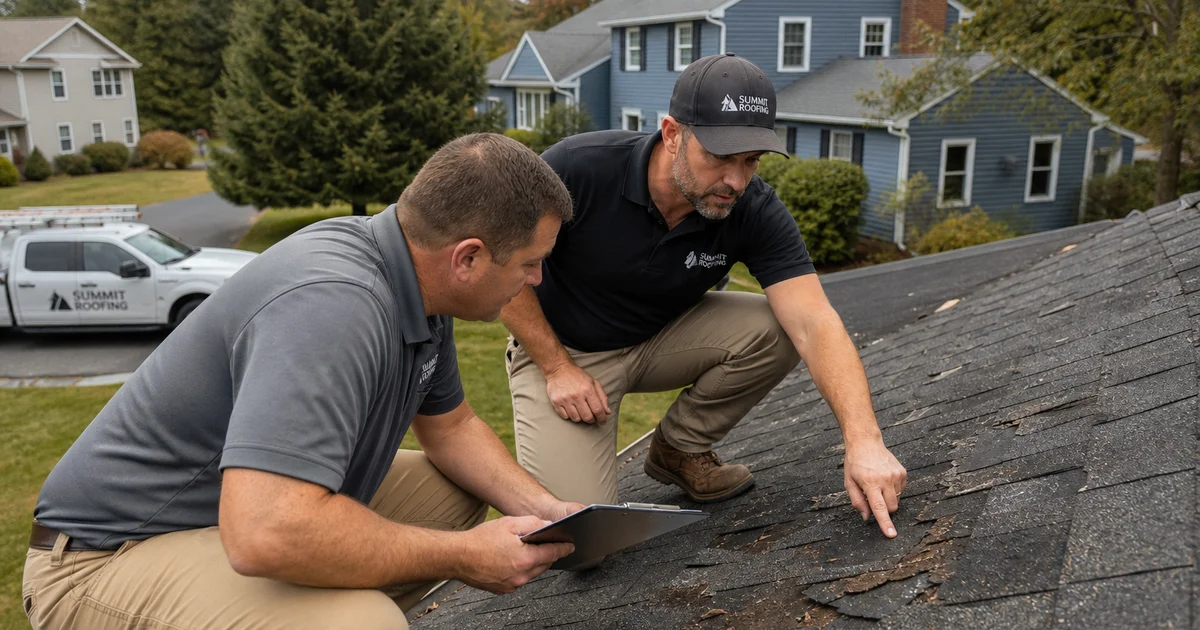
We understand the anxiety of seeing an insurance adjuster pull into your driveway after a major storm. That visit often feels like a test you did not study for.
Many property owners assume the carrier’s representative is there to find every single piece of damage.
The reality is quite different.
They are actually looking at your property through a very specific, policy-driven lens.
Our team has walked hundreds of Connecticut properties alongside these professionals. Knowing exactly how they operate makes a massive difference in your final claim.
Let us look at the exact steps an adjuster takes, what they commonly miss, and how you can protect your investment during an insurance adjuster roof inspection.
What an Adjuster Actually Does
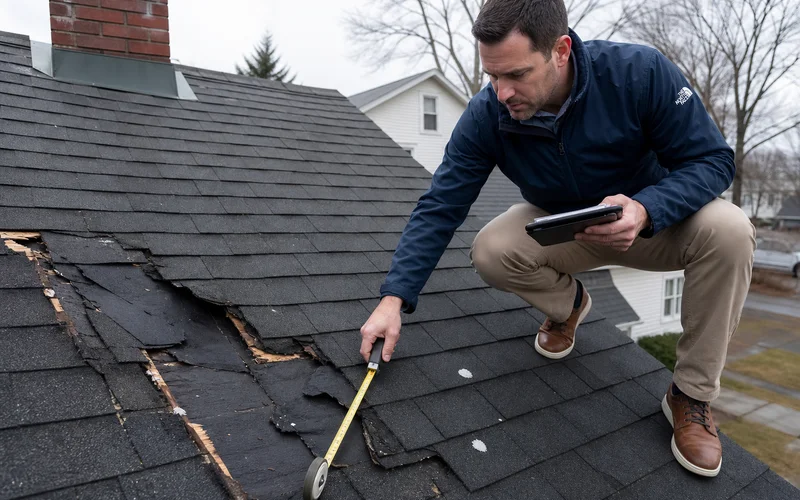
An insurance adjuster documents damage on behalf of the carrier to create a scope of loss. This itemized estimate dictates exactly what the insurance company will pay to fix your property.
These professionals are not your personal advocates. They act as carrier representatives trained to assess damage and enforce the strict terms of your policy.
We always tell Connecticut homeowners that this process is rarely adversarial. To understand their role, you have to look at what they are actually hired to do.
- Their Job: Identifying sudden storm-related damage.
- Their Job: Applying depreciation based on the age of your materials.
- Not Their Job: Finding unrelated wear and tear to fix for free.
- Not Their Job: Advocating for upgrades not explicitly required by local building codes.
You are the only person at that meeting who benefits from capturing every single damaged shingle. This dynamic explains why having a qualified roofer present is so critical.
The Typical Adjuster Meeting
A standard residential roof inspection usually takes 20 to 40 minutes from the moment they park. The adjuster will physically walk the property and document specific visible damage.
We see the exact same sequence play out during nearly every visit. Knowing this routine helps you prepare for the adjuster meeting roof appointment.
- Walk the property exterior: They note visible siding, gutter, or window damage from the ground.
- Climb the roof: They might use your ladder or bring their own to access the surface.
- Document with photos: They use pitch gauges and chalk to highlight storm-relevant impacts within a standard 10-foot by 10-foot test square.
- Take material notes: They record the age, brand, and general condition of the shingles.
- Give a brief verbal summary: They discuss their initial findings with you before leaving.
The actual financial assessment happens back at their desk. Most adjusters use an estimating software called Xactimate, which handles roughly 80% of property claims nationwide.
Our contractors know that the field notes dictate what goes into Xactimate. If a detail gets missed on the roof, it will never show up in the final dollar figure.
What Adjusters Often Miss
Adjusters frequently miss latent wind damage, non-obvious slope impacts, and local building code upgrades when a contractor is absent. Their fast-paced schedule makes it easy to overlook subtle failures. See also: Roof Insurance Claim Denied: What to Do Next.
We categorize these common omissions into three specific areas.
1. Latent Wind Damage
Most visual inspections focus entirely on missing or visibly folded shingles. They regularly miss creased shingles where the underlying sealant strip has broken.
Our crews know these unsealed shingles will completely fail during the next strong Nor’easter. A roofer on-site can gently lift the edge and physically demonstrate this broken seal to the adjuster.
2. Hail Damage on Non-Obvious Slopes
Adjusters usually stick to walking the front slope and perhaps one side. North-facing pitches and back slopes receive far less attention.
Hail does not fall in a perfect, uniform pattern. A professional roofer makes sure every single slope gets a thorough assessment that meets standard engineering guidelines.
3. Code-Required Upgrades
The Connecticut State Building Code requires an ice-and-water shield extending at least 24 inches inside the exterior wall line for any roof replacement. A partial slope repair might skip this rule.
We actively advocate for these mandatory safety upgrades. Replacing a full slope triggers the code requirement, meaning the carrier must pay for the proper weatherproofing.
Ground vs Roof Inspections
Some adjusters perform ground inspections using binoculars instead of physically walking the roof. This shortcut happens frequently on multi-story commercial buildings or homes with incredibly steep pitches.
These remote assessments miss a massive amount of surface damage. Looking through a camera lens cannot replace a hands-on physical inspection.
We strongly advise taking specific actions if an adjuster proposes a remote visit.
- Ask for an on-roof inspection or a certified drone inspection (like an EagleView report) at the very least.
- Document your request via email so you have a written record.
- Request an official re-inspection if the resulting scope seems suspiciously low.
A ground inspection that results in a poor settlement offer gives you a perfectly valid reason to file an appeal. The lack of physical evidence works in your favor during a dispute.
Scope of Loss vs Estimate
A scope of loss is the insurance carrier’s formal offer, while an estimate is a contractor’s actual pricing for the job. These two documents serve entirely different purposes and rarely match perfectly on the first try.
We frequently help property owners understand the gap between these numbers.
| Document | Creator | Purpose |
|---|---|---|
| Scope of Loss | Insurance Adjuster | The itemized list of approved damage and the carrier’s initial payout calculation. |
| Estimate | Professional Roofer | The real-world cost of labor, local materials, and required permits to finish the work. |
When a local estimate comes in higher than the carrier’s scope, you have options.
Our office handles this discrepancy through a few proven methods.
- Filing Supplements: Adding legally valid, missed items to the carrier’s original scope.
- Negotiating Prices: Providing local supplier invoices when Xactimate labor rates fall below current Connecticut market prices.
- Adding Code Riders: Forcing the carrier to cover local building code updates that were excluded initially.
ACV vs RCV Explained
Actual Cash Value pays only the depreciated value of your roof, while Replacement Cost Value covers the full price of a new installation. This single policy distinction dictates your entire financial responsibility for a claim.
We consider this the most critical detail on your declarations page.
Actual Cash Value (ACV)
An ACV policy means the carrier subtracts years of use from your payout. A 15-year-old asphalt roof has lost roughly 60% of its usable lifespan through depreciation.
You might receive a mere $5,600 check for a project that actually costs $14,000 to complete. Older properties take massive financial hits under this structure.
Replacement Cost Value (RCV)
RCV coverage provides the total funds needed for replacement, split into two separate payments.
Our clients heavily prefer this type of policy for obvious reasons.
- First check: The initial ACV amount is paid right after the scope is approved.
- Second check: The recoverable depreciation is released once the final contractor invoice proves the work is finished.
Most modern Connecticut homeowner policies use an ISO HO-3 form that defaults to RCV. Older plans or specific credit union policies might sneak ACV terms into the fine print. You should always call your agent to verify.
Why Contractor Presence Helps
A contractor ensures the adjuster identifies every piece of damage and includes realistic local labor rates on the spot. Professional representation stops common omissions before they ever hit the final paperwork.
We have represented over 200 Connecticut claims, and the data speaks for itself. Having a knowledgeable advocate on the roof yields consistently better results.
- Catches 1 to 3 extra damaged areas during a standard 30-minute walkthrough.
- Forces the inclusion of mandatory state building code upgrades.
- Identifies hidden seal failures that a quick visual check ignores.
- Corrects lowball labor estimates with real-world local pricing.
A typical $14,000 covered claim usually sees a $1,500 to $4,000 increase when a professional is present. This financial bump easily justifies using the insurance claim assistance we provide.
What to Bring to the Meeting
You should bring printed storm data, maintenance records, and an independent roofer’s inspection report to the meeting. Organized documentation forces the adjuster to take your claim seriously from minute one.
We recommend treating this appointment like a formal business presentation.
- NOAA weather records verifying the exact date of the hail or wind event.
- A comprehensive photo packet created by your roofing contractor.
- Receipts proving the roof’s age and any recent maintenance work.
- Paperwork from any previous property claims.
- A bulleted list of specific interior leaks or exterior concerns.
Your personal knowledge of the property combined with a contractor’s technical expertise creates a solid foundation.
This teamwork produces the strongest possible financial outcome for your property. Working with a roof insurance adjuster is much easier when you come prepared.