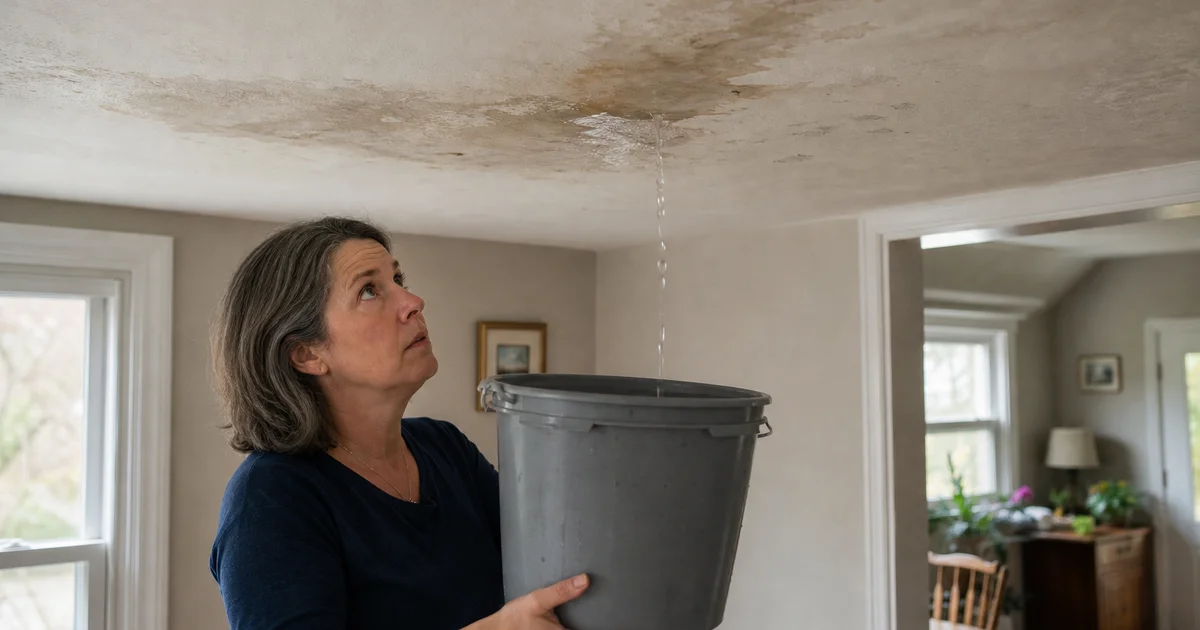
We see the same pattern every season across Connecticut. A sudden Nor’easter brings 50 mile-per-hour winds, and water starts pouring into your living room.
The average residential water damage claim easily exceeds $4,100, making fast action critical. Our team responds to these exact emergencies every week.
Let’s outline the exact emergency leak steps to minimize damage right now, what mistakes to avoid, and how to stabilize the situation.
What To Do When Roof Is Leaking: Immediate Steps (First 10 Minutes)
We recommend containing the water immediately before attempting to figure out the source of the leak. When water is actively coming through your ceiling, work in a specific order to protect your property.
1. Move Belongings Out of the Wet Zone
Start by moving furniture, electronics, rugs, and valuables out of the immediate area. Water spreads faster than you expect across flat surfaces.
Our experience shows that waterlogged items often cost more to replace than the drywall itself. Insurance adjusters using software like Xactimate flag ruined furniture as a massive cost driver. Take a few minutes to clear the room completely.
2. Position Buckets and Plastic Sheeting
Place standard five-gallon buckets directly under the active drip points. You should also lay down 6-mil polyethylene plastic sheeting on the floors and any heavy furniture you couldn’t move.
We always use thick plastic because thin garbage bags easily tear under the weight of falling water. Tape the edges of the tarp flat to contain the damage to a tight perimeter.
3. Call Your Roofer
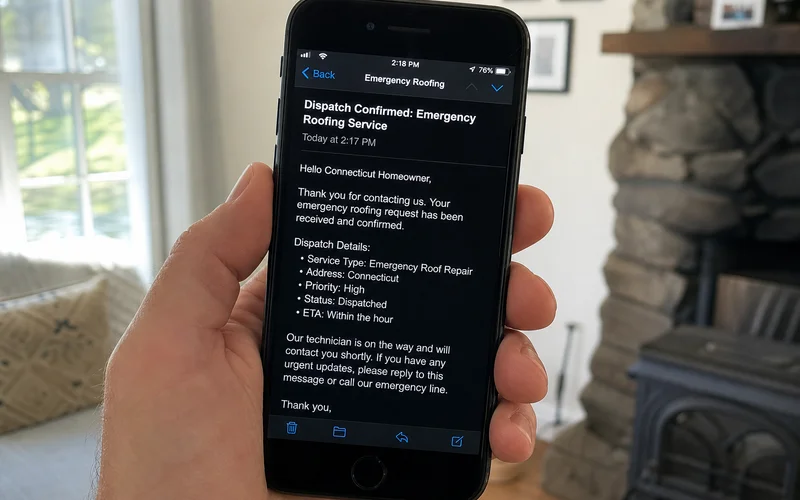
Dial (203) 824-0275, available Monday through Friday, 7am to 6pm. We typically dispatch a team as quickly as possible during business hours and prioritize active leaks. After-hours calls get scheduled for a first-thing-morning visit on the next business day.
Be prepared to tell the dispatcher:
- Your exact address
- When the leak started
- How fast water is coming through
- Whether there is any visible exterior damage
- Whether a recent storm event occurred
4. Address Any Bulging Ceiling Safely
A standard half-inch sheet of drywall weighs about 1.6 pounds per square foot when dry. That weight multiplies rapidly as it absorbs water, creating a dangerous collapse risk.
We strongly advise releasing the pressure deliberately if you see a visible bulge.
- Position a sturdy bucket directly under the lowest point of the bulge.
- Use a screwdriver or thin nail to poke a small hole at the lowest point.
- Let the water drain into the bucket so the ceiling section is preserved.
Only do this if you can work safely from a stepladder. Never reach blindly or stand on an unstable surface.
What NOT to Do
Avoid climbing on the structure, tearing at materials, or attempting DIY repairs during a storm. These five common mistakes will only make the situation worse and increase your total costs.
- Climb on the roof to see what is wrong. Wet roofs are extremely slippery, and storm-damaged shingles are unstable. The Centers for Disease Control and Prevention reports that over 500,000 people are treated annually for ladder-related injuries. You cannot usually fix a leak from above in active conditions, so stay on the ground.
- Use household tools on the ceiling. Hammering or aggressive pulling on a wet ceiling causes more damage than the leak itself. Let the water drain naturally through the pinhole you created.
- Wait to call for help. Active leaks compound fast, and every hour of additional water increases the repair cost. We see restoration bills jump by thousands of dollars when homeowners wait out the storm.
- Try to patch the roof yourself in active rain. Connecticut Nor’easters regularly produce wind gusts exceeding 50 miles per hour. Tarps that are not properly secured become wind hazards and fail to seal the leak.
- Ignore secondary damage indicators. Wet insulation, soaked drywall, and damp wood framing all need to be assessed even after the water stops.
Documenting for Insurance
If you plan to file a claim, document everything before any repair work begins. This photographic evidence supports your claim independently of what the adjuster sees days later. See also: Emergency Roof Tarping: What to Expect.
Our standard advice is to capture extensive visual evidence before the drying process starts.
- Photograph the active leak, using video to clearly show the flow rate.
- Capture all visible water damage across ceilings, walls, floors, and belongings.
- Take pictures of any visible exterior damage from the ground only.
- Ensure the date and time are visible, which most phones add automatically.
- Save weather records of the specific storm event.
Insurance adjusters rely heavily on comprehensive proof to authorize payouts. The average household water damage claim sits around $4,100, so detailed records protect your wallet.
What Happens When We Arrive
Our crews prioritize containment and assessment the moment they pull into your driveway. A typical emergency leak response visit involves stopping the active water and evaluating the full scope of the problem.
- Quick safety assessment: Verify roof access is safe given the current weather conditions.
- Emergency tarp installation: We secure a heavy-duty tarp over the affected area to stop further water entry.
- Source diagnosis: Identify the actual leak source, which is often far away from the visible interior ceiling damage.
- Honest read on scope: Provide a targeted repair, partial replacement, or full replacement recommendation.
- Written estimate: Deliver a detailed cost breakdown within 24 to 48 hours of the visit.
Standalone emergency tarping costs $350 to $800, depending on the size and pitch of your roof. We often see this tarp cost rolled into the insurance claim scope when it leads to covered repair work.
Here is a quick breakdown of what to expect between the temporary fix and the permanent solution.
| Phase | Average Cost | Protection Duration | Primary Goal |
|---|---|---|---|
| Emergency Tarping | $350 to $800 | 30 to 60 days | Stop active water entry |
| Permanent Repair | Varies by scope | 15 to 30+ years | Restore structural integrity |
After the Crew Leaves
Once the leak is contained, your immediate focus shifts to drying the affected areas and scheduling permanent repairs. We recommend letting the structural framing dry completely before patching any interior surfaces.
According to the Environmental Protection Agency, mold can begin growing on damp surfaces within 24 to 48 hours. Fast moisture removal prevents this secondary damage.
- Dry the affected areas: Run high-velocity fans, set up dehumidifiers, and open windows if the weather permits.
- Do not repair drywall or ceilings yet: Let the wood framing fully dry first, which typically takes three to seven days.
- Photograph the dried damage: This is needed for your ongoing insurance documentation.
- Schedule the permanent repair: This is usually planned within 7 to 14 days of the initial tarp visit.
Our team installs tarps that buy you 30 to 60 days of solid weather protection. You do not need to make stressful, same-week repair decisions under pressure. Take your time to review the estimate and consult with your insurance provider.
Stabilize Your Home Today
Searching for roof leaking what to do online is common during a storm, but fast physical action makes all the difference. We are always ready to help you secure your property and plan the right repair. If you have an active leak, call our emergency dispatch line immediately so we can get a tarp on your roof and stop the water.