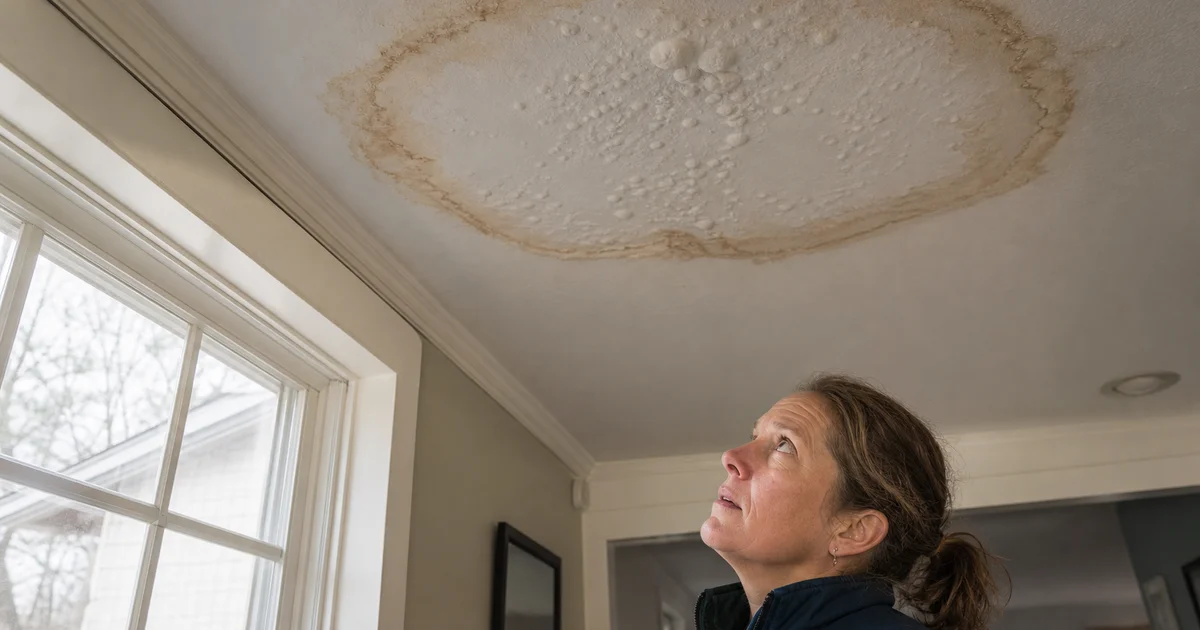
You know how frustrating it is to spot a water stain on the ceiling right after a heavy Connecticut downpour. The common causes of roof leaks often start small, hiding in plain sight for months before finally breaking through your drywall. Our team sees this exact scenario play out every week.
Catching these early warning signs separates a minor fix from a massive structural headache.
Let us look at the data, review what the damage is actually telling us, and explore a few practical ways to respond.
The Eight Most Common Causes of Roof Leaks
In rough order of frequency on Hartford County homes, these are the leak sources we diagnose most often.
Finding the exact match for your symptoms is the first step toward a permanent solution.
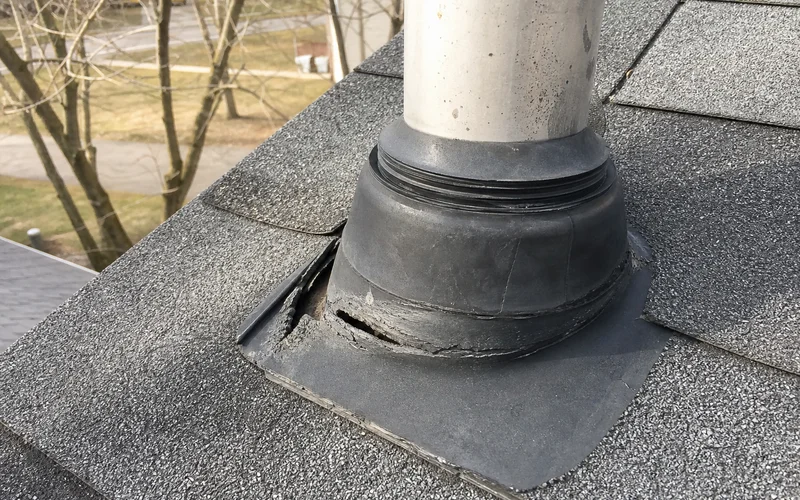
1. Cracked Vent Boots
The rubber gaskets around plumbing vent pipes are typically the first thing to fail on an aging roof. Our crews find that standard neoprene vent boots have a functional lifespan of just 10 to 15 years, according to 2025 National Roofing Contractors Association data. The rubber dries out under the sun, cracks wide open, and admits water directly around the pipe.
Replacing this simple component is a quick and highly effective fix. Minor repair jobs for pipe boots typically cost between $450 and $1,200 in 2026, depending on the steepness and accessibility of your property.
Warning signs of a failing vent boot:
- Missing pieces of rubber near the pipe base
- Visible cracks or peeling in the seal
- Water stains on the ceiling directly below a bathroom
2. Chimney Step Flashing Failures
The L-shaped metal flashing seals the critical joint where the chimney meets the roof slope. Our inspections frequently reveal rust holes, separated edges, or improper original installation in this area. Flashing repair in Connecticut currently averages between $300 and $1,500 based on recent 2025 regional construction data.
Material choice heavily influences how long this seal will actually survive. Galvanized steel flashing generally requires replacement every 20 years, while copper installations can last much longer.
3. Lifted or Missing Shingles
Severe wind events actively lift shingles whose sealant strips have weakened with age. Our repair technicians frequently spot this type of damage along coastal communities near Long Island Sound. The strict Connecticut State Building Code enforces high wind-rating requirements precisely to combat this issue.
Even shingles that look completely reseated after a sudden storm can harbor broken seals. These hidden breaches will readily admit water during the next passing rainstorm.
Actions to take after high winds:
- Check your yard for missing shingle tabs.
- Look for horizontal crease lines across the top of shingles.
- Call a professional to inspect the sealant strips.
4. Valley Leaks
Where two roof slopes meet, the valley relies on either metal flashing or a woven shingle technique to shed water. Our team often discovers shingle damage right at the center of the valley. Medium repairs involving complex valley work can run between $1,800 and $4,500 in 2026.
Accumulated debris like leaves and pine needles will aggressively push flowing water sideways under the materials. Missing ice-and-water shield underneath the shingles makes this vulnerability even worse.
5. Ice Dam Damage to Underlayment
Repeated winter ice-dam cycles damage the eave-area underlayment even when the surface shingles look perfectly fine. Connecticut weather creates the perfect recipe for ice dams when thick snow melts and refreezes right at the roof edge. The Hartford insurance data specifically lists roof damage from ice and snow as a top winter weather claim.
Our local roofers see this exact damage pattern every spring. Water staining typically appears on the underside of exterior eaves or high up in the attic.
Common ice dam indicators:
- Large icicles hanging from the gutter lip
- Water stains running down exterior walls
- Gutters packed solid with frozen blocks of ice
6. Clogged Gutters Causing Back-Flow
Especially in the fall after heavy leaf-fall, clogged gutters overflow at the eaves. Water then easily finds its way past the protective flashing and into the wooden eave assembly. A standard aluminum gutter packed solid with wet leaves and ice can easily hold over 300 pounds of dead weight.
Our maintenance crews constantly pull heavy, wet debris from clogged gutters before winter hits. This massive strain pulls the gutter away from the fascia, creating a permanent gap for water to enter.
7. Ridge Vent End-Cap Failures
The ridge vent runs along the highest roof peak and relies on end caps to keep the weather out. Our service calls frequently pinpoint cap failures caused by improper sealing or direct debris damage. This specific breach allows water to blow directly into the attic space.
Proper ventilation components like ridge vents are required by building codes to lower attic temperatures. The Lawrence Berkeley National Lab found that improving roof efficiency and ventilation can lower surface temperatures by more than 13 degrees.
Quick checks for your ridge vent:
- Look for missing plastic or metal end pieces.
- Check the attic for damp smells directly under the peak.
- Ensure debris is not blocking the exhaust flow.
8. Nail Pops
Nails can slowly work their way back up out of the wooden decking. Our roofers see this constantly on older Hartford County homes due to natural settling and thermal cycling. This upward movement breaks the water seal at every single affected nail location.
Each exposed nail head becomes a tiny, potential leak point. Sealing these popped nails prevents slow drips from rotting your underlying plywood over time.
How Water Actually Travels
If you are staring at a ceiling stain wondering ‘why is my roof leaking,’ keep in mind that water from a roof leak rarely drips straight down into your living room. Once water gets through the exterior roof system, it stubbornly follows the internal framing. It will run along rafters, truss bottom chords, or sheathing seams before finally dropping down.
This lateral movement explains why water can travel 5 to 15 feet from the entry point before emerging at a ceiling. It will often saturate your attic insulation entirely before showing any visible signs below.
Real diagnosis means carefully tracing this invisible path backward to the source. Our experts evaluate where the stain is, what the framing direction is in that specific area, and what sits up-slope on the roof exterior.
| Diagnostic Step | What It Tells You |
|---|---|
| Locating the Ceiling Stain | Identifies the lowest pooling point. |
| Checking Framing Direction | Shows the pathway the water took. |
| Finding Up-Slope Features | Points to the likely exterior breach. |
Connecticut Climate-Specific Sources
Three leak sources are significantly more common in Connecticut than in warmer southern climates. Our weather patterns create a unique set of stresses that roofing materials must constantly battle. With average roof replacement costs hitting $8,500 to $16,500 for shingles in 2026, catching these specific issues early is a massive financial advantage. See also: What to Do When Your Roof Is Leaking.
- Ice-dam back-flow: Snow melt refreezes at the eaves and forces standing water up under the lower shingles.
- Wind-driven rain during Nor’easters: Sustained, high-velocity winds push heavy rain uphill directly on the shingle surfaces.
- Freeze-thaw damage to flashing seals: Experiencing 40 to 60 freeze-thaw cycles per year severely stresses all caulking and sealants.
Any proper roof inspection in our state should specifically look for damage from these mechanisms. This targeted approach is required even when the immediate visible damage mimics a completely different cause.
When the Source Isn’t the Roof
Sometimes suspected roof leak sources are not actually originating from the roof deck itself. Our team frequently arrives to fix a roof only to discover an entirely different home maintenance issue. These hidden issues cause the exact same symptoms as a failing shingle.
- Plumbing leaks: Hidden pipes in walls or upper-floor bathrooms can perfectly mimic roof leaks.
- Condensation: A single bathroom exhaust fan incorrectly venting into the attic can pump gallons of moisture into your insulation, causing condensation to pool on cold sheathing and drip back down.
- Ice-dam water: Melting ice can sometimes enter directly through decorative gable vents rather than penetrating the roof itself.
- Siding flashing failures: Improperly sealed upper-floor windows can route rainwater down inside the wall cavity.
A real, professional diagnosis carefully differentiates between roof and non-roof sources. When we inspect a home, we always check the attic from below before automatically assuming the source is on the exterior.
Diagnosis Process
A typical CT roof leak diagnosis from a qualified professional takes roughly 30 to 60 minutes. Our thorough process ensures we find the true source of the water instead of just applying a temporary bandage. Fixing the root cause protects your home value and your peace of mind.
- Interior assessment: Assess all visible water staining and identify the underlying framing direction.
- Attic inspection: Trace the water path from below, actively looking for hidden staining or active moisture in the insulation.
- Roof inspection: Walk the roof directly above the suspected entry zone to examine all penetrations and flashing.
- Cause confirmation: Identify the specific mechanical failure that clearly explains the exact water path.
- Honest quote: Review a clear repair scope and cost, or a replacement recommendation if the roof has earned it.
We provide a free emergency leak inspection to pinpoint the common causes of roof leaks for local property owners. Call (203) 824-0275 for fast response during office hours, Monday through Friday, 7am to 6pm.