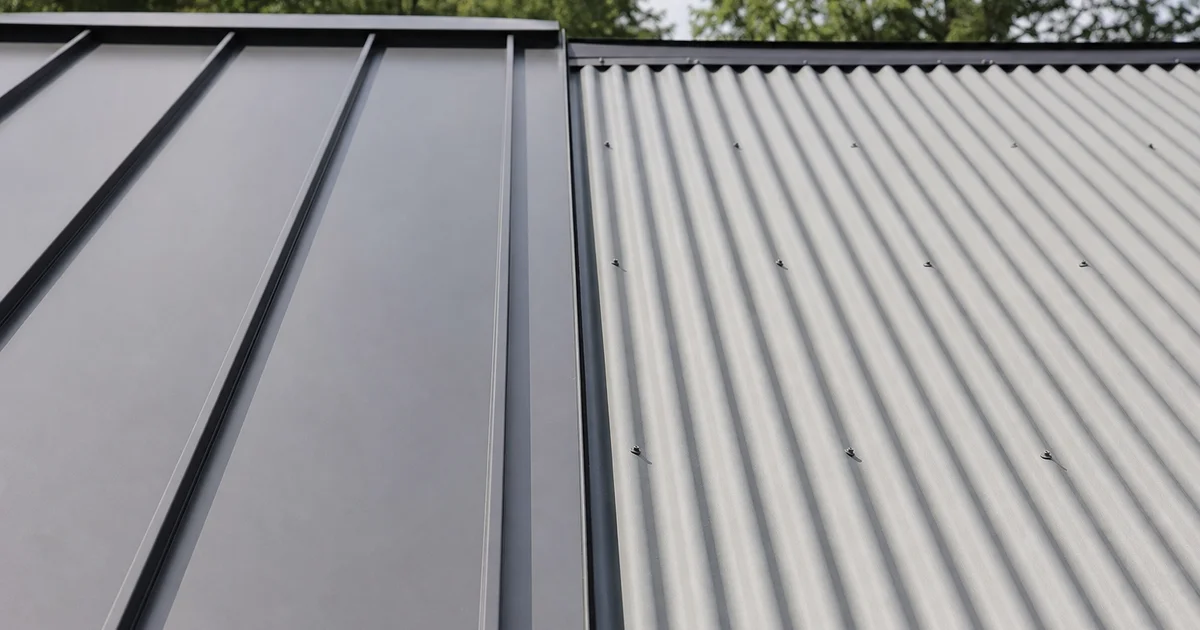
You notice a massive difference when inspecting properties across Connecticut after a severe weather season. We consistently see older roofing systems failing prematurely. A standing seam vs corrugated metal roof comparison highlights the primary cause of these leaks.
The distinction comes down to how the panels are fastened to the decking.
Reviewing the actual performance data outlines the best applications for both systems.
The Mechanical Difference
The two systems attach to the roof in fundamentally different ways. That single design difference drives most of the performance comparisons.
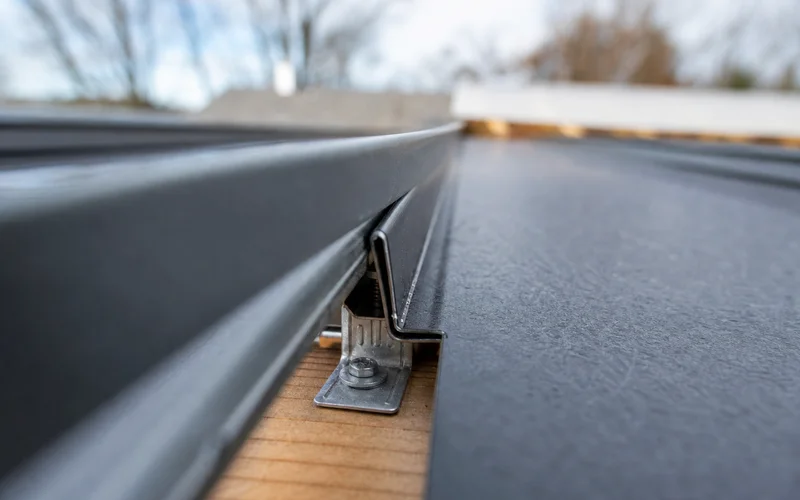
We use concealed clips for standing seam installations. These small metal brackets lock under raised seams between panels. The panels slide into the clips, and the seams are mechanically crimped shut.
This concealed approach offers major structural benefits:
- No screws or fasteners penetrate the panel surface.
- Floating clips allow the metal to glide back and forth during temperature swings.
- Weather elements never touch the actual fastening hardware.
Corrugated or ribbed systems use a completely opposing method. Screws are driven directly through the panel face into the decking below.
Neoprene washers sit under each screw head to seal against water. Hundreds or thousands of exposed fasteners hold the panels down.
Standing Seam vs Corrugated Metal Roof: Side-by-Side Comparison
A side-by-side review reveals stark contrasts in lifespan and installation costs. We created this breakdown to simplify your decision. Every factor impacts the long-term value of the property.
| Factor | Standing Seam | Corrugated/Ribbed |
|---|---|---|
| Fastener exposure | Concealed (none visible) | Exposed (hundreds visible) |
| Lifespan | 40-50 years | 25-40 years |
| Weather-tightness | Excellent | Good (depends on washers) |
| Aesthetic | Sleek, modern, clean | Industrial, agricultural |
| Cost | $$$ ($14-$22/sq ft installed) | $$ ($9-$14/sq ft installed) |
| Common residential use | Yes (default for residential metal) | Outbuildings, occasional residential |
| Solar compatibility | Excellent (clamp mount) | Good (penetration mount) |
| Repair complexity | High (specialized) | Moderate (replace screws) |
Why Standing Seam Lasts Longer
Standing seam panels outlast corrugated options because the installation method eliminates exposed vulnerabilities. The exposed fasteners on a corrugated roof act as the system’s weakest point. See also: Metal Roof Lifespan and Warranties.
Connecticut thermal cycling creates massive temperature swings, with direct summer sun heating roof surfaces well past 150 degrees. A standard 100-foot steel roof panel will expand and contract nearly an inch as temperatures fluctuate. Each movement slightly shifts the hundreds of exposed screws.
We find that UV exposure rapidly degrades standard rubber seals. Recent 2026 data shows that standard neoprene washers lose up to 40 percent of their elasticity within five to seven years of sun exposure. South-facing roof slopes experience this degradation even faster.
Over 20 to 25 years, the washers compress, and the screws back out. Small gaps appear around the screw heads, and water easily finds its way in. Our crews replace countless failing screw-down roofs for this exact reason.
Standing seam installations completely avoid this problem due to their smart design:
- Clips holding the panels remain protected under the raised seams.
- Weather never touches the fasteners.
- The system easily absorbs thermal expansion without stress.
The result provides consistent weather-tightness across the roof’s entire life.
When Corrugated Still Makes Sense
Corrugated panels remain a viable choice for specific functional outbuildings and budget-restricted projects. We recognize three legitimate uses for corrugated or ribbed metal in 2026. These applications balance cost with functional requirements.
- Detached outbuildings: Garages, sheds, or barns function perfectly fine with a shorter lifespan and visible fasteners.
- Agricultural-style aesthetic: Modern farmhouses with intentional rural styling sometimes call for corrugated metal.
- Budget residential installations: You might prefer metal over asphalt for fire resistance or snow-shedding capabilities when standing seam pricing exceeds the project budget.
Our installers frequently use heavier 26-gauge panels instead of standard 29-gauge material for these projects. This upgrade helps prevent denting from hail or falling branches.
Aesthetic Trade-Offs
Standing seam offers a sleek profile that enhances modern home designs, while corrugated metal provides a distinct rustic appearance. The clean, vertical lines of a standing seam roof pair beautifully with specific architectural styles.
- Modern colonials
- Tudors and English revival
- Modern farmhouses
- Contemporary builds
- Most Hartford County premium homes
We frequently see homeowners associations in Fairfield and Hartford counties explicitly require standing seam systems for neighborhood compliance. Corrugated metal carries a distinctly industrial appearance that works best for specific contexts.
- Agricultural buildings
- True farmhouse styles
- Outbuildings and garages
- Properties intentionally aiming for a rugged aesthetic
Our sales data proves that standing seam configurations typically deliver better resale value than corrugated panels on the exact same house. Buyers appreciate the premium look and maintenance-free design.
Cost Math
The initial investment for premium metal roofing pays off through long-term durability and potential insurance savings. For a typical 25-square residential roof, the installation costs break down clearly.
- Corrugated install: $9,000 to $14,000 typical
- Standing seam install: $14,000 to $22,000 typical
The $5,000 to $8,000 delta represents the premium for the superior system. Over a 40-year horizon, that initial expense pays itself back through extended lifespan and zero fastener maintenance.
We strictly adhere to local building codes during every installation. Connecticut State Building Code requires specific ice and water shield membranes under metal roofs, which is factored into these 2026 pricing estimates.
Our clients often secure lower homeowners insurance premiums by installing a standing seam system with a Class 4 impact resistance rating. Check with your provider to see what discounts apply to your property.
The Hybrid Approach
Mixing both panel types across a property provides excellent protection while optimizing your renovation budget. We frequently design cost-balanced strategies for properties with multiple structures. This approach maximizes your investment.
- Primary House: Standing seam (prioritizes long lifespan and curb appeal)
- Detached garage: Corrugated (saves money while maintaining a cohesive look)
- Pole barn or shed: Corrugated (maximizes budget efficiency)
This combined approach delivers the premium aesthetic and lifespan exactly where it matters most. Our installation teams carefully plan the transition flashing if the two different roof types meet on the same structure. Proper detailing prevents leaks at these vulnerable connection points.
How We Recommend
Standing seam represents the smartest long-term investment for a primary residence in Connecticut. The cost premium is substantial, but the durability and aesthetic upgrades provide genuine value.
We install both systems but strongly favor standing seam on the main house unless a specific reason supports a corrugated selection. Budget constraints, intentional agricultural aesthetics, or outbuilding contexts are the main exceptions.
If you are evaluating different options, the metal roofing service page details our product range and installation approach. Our estimators provide free written quotes that detail the exact cost differences for your specific property.
Reviewing these numbers side-by-side makes the final choice much easier. Making the final standing seam vs corrugated metal roof choice determines the long-term protection of your home.
Reach out today to schedule an inspection and explore the best path forward.