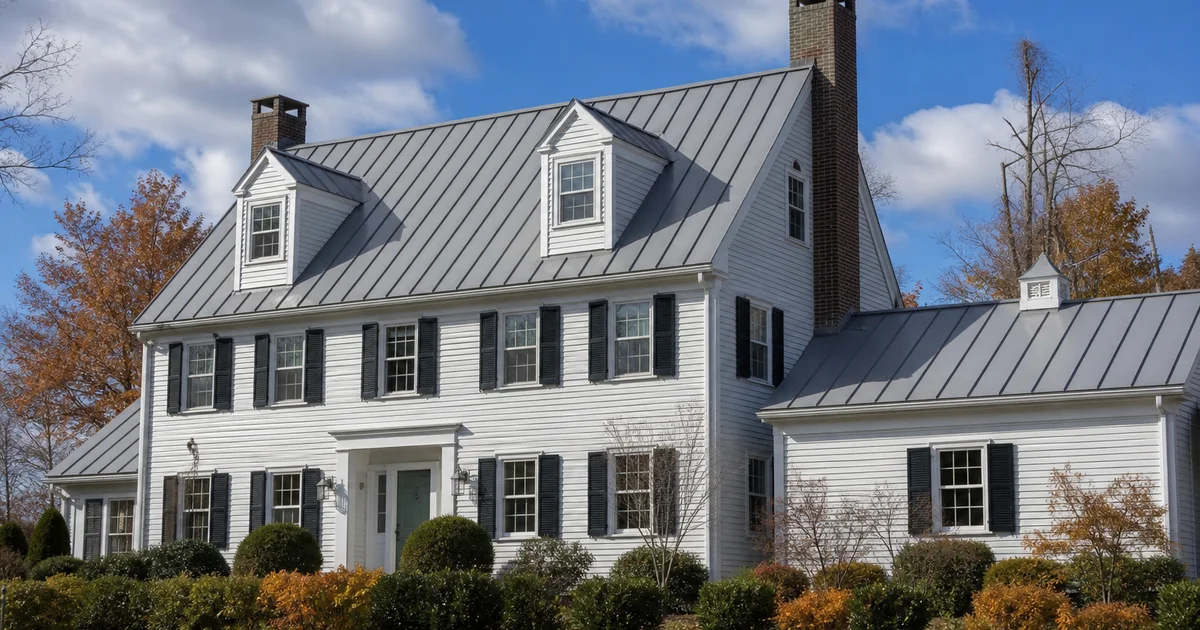
You probably know that replacing a property’s roof is a major capital expense. From what I have seen over years of installing these systems across Connecticut, the promise of a “lifetime roof” often falls short if the details are ignored.
A standing seam metal roof lifespan warranty genuinely offers 50 plus years of protection.
That longevity completely changes the return on investment compared to standard materials. Let us examine the data behind these warranties. We will break down exactly what makes a metal roof last and how you can avoid the common mistakes that void coverage.
What 40-50 Years Actually Means
A standing seam metal roof with quality construction reaches its 40 to 50 year warranty lifespan much more reliably than standard materials. The 40 to 50 year figure is the typical service life when the installation strictly follows manufacturer guidelines.
Property owners often ask how long do metal roofs last compared to a standard $10,000 asphalt shingle option.
We constantly see 20 to 25 years as the absolute maximum for asphalt before Connecticut freeze-thaw cycles break it down. Installation quality matters heavily, because a poorly installed $25,000 metal system will fail in just two decades.
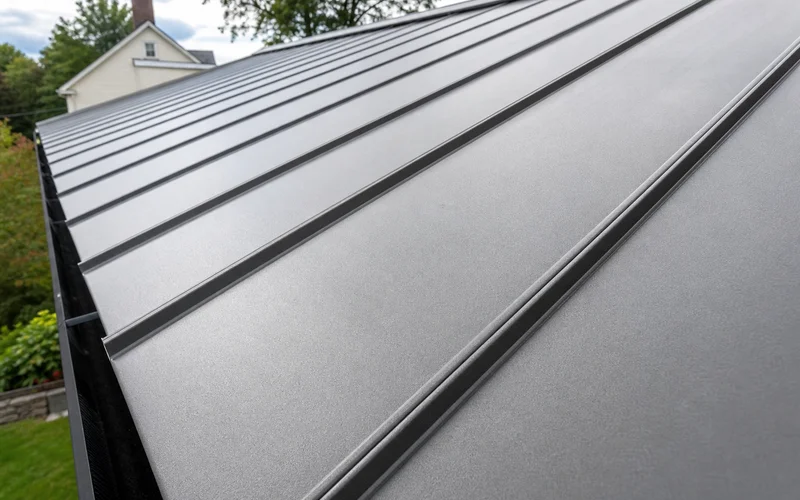
To ensure that half-century lifespan, your installation must address three specific performance areas.
The Three Warranty Layers
A complete metal roof carries three separate metal roof warranty types covering paint, substrate, and workmanship. Each layer protects against very different failure modes that property owners need to understand.
We provide project documentation that registers all three coverages immediately upon completion. This approach prevents finger-pointing between the manufacturer and the installer if a problem arises later.
Paint and finish warranty. This covers severe fading and chalking of the Kynar 500 or PVDF finish. Premium coatings typically guarantee 30 to 40 years of color retention. The industry standard limits color change to just 5 Hunter ΔE units, meaning the fade remains barely noticeable to the human eye.
Substrate warranty. The metal core itself is protected against rusting through or perforation. Quality steel with a Galvalume coating usually carries a 40 to 50 year guarantee. Copper and premium aluminum options offer even longer baseline protection.
Workmanship warranty. The installation team provides this coverage for the actual labor. Leaks at the seams or flashing failures happen when contractors use incorrect butyl tape or over-tighten fasteners. Our crew typically provides 10 to 25 years of coverage against these specific installation defects.
What Determines Real-World Lifespan
Several physical components, from metal gauge to underlayment quality, dictate whether your roof survives 50 years or starts leaking at 30. The harsh winters and coastal winds in our region test every part of the roofing system. See also: Standing Seam vs Corrugated Metal Roofing.
We focus heavily on the underlying materials just as much as the visible panels. Missing just one of these specifications will drastically reduce the standing seam lifespan.
Since there are many moving parts, I will break down the exact specifications required for maximum durability.
Core Materials
- Panel gauge: The residential standard for structural integrity is 24-gauge steel. Thinner 26-gauge panels represent a budget choice that dents easily during severe hail storms.
- Substrate quality: A Galvalume alloy combines steel, aluminum, and zinc to fight off humidity. This coating performs exceptionally well in coastal areas near Long Island Sound compared to plain galvanized steel.
- Finish coating: Kynar 500 represents the absolute benchmark for color durability. Budget alternatives like silicone-modified polyester look fine on day one but chalk aggressively within a decade.
Installation and Protection
- Install quality: A concealed-fastener system relies heavily on correct clip placement. Our team uses standard 18-inch to 24-inch clip spacing to lock panels down securely. This spacing achieves wind uplift ratings exceeding 140 miles per hour.
- Underlayment: A high-temperature ice and water shield is mandatory under metal panels. Standard asphalt underlayment can melt because roof temperatures easily reach 250 degrees Fahrenheit in the summer sun.
- Moisture barriers: The Connecticut Building Code requires ice and water barriers extending 24 inches inside the exterior wall line. Many experienced local contractors push this to 36 or 48 inches to block severe winter ice dams.
How to Keep Your Warranty Coverage
Manufacturer and workmanship warranties require strict compliance with approved maintenance procedures and specific material compatibility. Simple mistakes by uncertified handymen can instantly void decades of protection.
We always leave our clients with a clear maintenance document. This packet outlines exactly what activities compromise the weather-tight seal.
- Unauthorized modifications: Cutting a new skylight or plumbing vent interrupts the panel’s ability to expand and contract. This thermal movement is required by ASCE 7-22 building codes.
- Incompatible sealants: Applying cheap silicone caulk instead of manufacturer-approved butyl sealant tape ruins the weather-tightness guarantee.
- Excessive foot traffic: Walking on the high ribs or unsupported flat areas causes permanent crimping. This damage separates the mechanical seams.
- Improper repairs: Hiring a standard shingle roofer to patch a leak usually voids the manufacturer coverage for that entire roof section.
If the system requires service, you must hire a specialized contractor who documents the repair process. Our office retains all original warranty paperwork. These records streamline any future service requests.
Comparing Warranty Specs Across Brands
Evaluating quotes from different installers requires a side-by-side comparison of the technical specifications for paint, wind ratings, and warranties. A lower price usually indicates a shorter coverage window or a thinner material.
We recommend using a standardized checklist to compare every bid you receive. This data-driven approach removes the guesswork from selecting a contractor.
| Specification | The Target Standard | What to Look For |
|---|---|---|
| Paint warranty | 30 to 40 years | Maximum 5 Hunter ΔE fade limit |
| Substrate warranty | 40 to 50 years | Covers complete perforation |
| Workmanship | 10 to 25 years | Issued directly by the installer |
| Wind rating | 140+ mph | Meets ASCE 7-22 regional uplift codes |
| Hail rating | Class 4 | Highest impact resistance available |
| Underlayment | High-Temp Rated | ASTM D1970 compliant for 250 degrees |
Seeing lower numbers on any of these lines signals a budget product that will fail prematurely. The cost premium to upgrade to the highest specifications is usually modest relative to the total project budget.
Bottom Line
A properly installed standing seam system from a premium manufacturer will reliably protect your property for half a century. The return on investment becomes obvious when you factor in the avoided replacement costs over a metal roof lifespan warranty period.
We install 24-gauge steel with a Galvalume substrate and Kynar 500 finish as our baseline standard.
These premium materials ensure maximum weather resistance for decades. Our office registers all manufacturer warranties on your behalf and provides the workmanship coverage in writing. If you are considering an upgrade, the metal roofing service page details our complete product selection and installation process.