We constantly hear the same question from property owners dealing with storm damage across Hartford County. Understanding the metal roofing pros and cons is a major financial decision.
For the full scope of work behind this guide, see our metal roofing service.You need to know if that higher upfront investment actually translates into real-world savings.
Our crews see exactly how Connecticut’s freeze-thaw cycles destroy substandard roofs year after year. Let’s look at the 2026 market data, compare the metal roof advantages disadvantages, and explore the best ways to protect your home.
The Pros (Why Metal Wins for the Right Homeowner)
We recommend metal roofing because it delivers an unmatched lifespan and superior resistance to Connecticut’s severe winter weather. The long-term return on investment makes the high initial price tag worthwhile for permanent residents. Our team appreciates how this material handles heavy snow loads without straining your home’s structural integrity.
Unmatched Longevity and Safety
- 40 to 70 year lifespan. According to 2026 Metal Roofing Alliance data, standing seam systems routinely last up to 70 years. This performance doubles or triples the standard asphalt service life. Over a 30-year hold, you will likely replace an asphalt surface once or twice, whereas metal requires zero replacements. The life-cycle math heavily favors metal for long-tenure ownership.
- Class A fire and 140+ mph wind resistance. Metal simply will not burn, providing critical safety for wooded properties. These standing seam panels also carry a 140+ mph wind rating, which easily withstands the brutal Nor’easters that frequently hit our state.
- Concealed fastener integrity. Standing seam systems feature no exposed screws to back out, leak, or fail. The seams utilize a mechanical lock rather than an adhesive seal.
Weather Defenses and Efficiency
- Snow shedding. Standing seam profiles shed heavy snow before it accumulates and refreezes at the eaves. In the Hartford County climate, this action is genuinely useful for ice-dam prevention on north-facing slopes. Our recent repair calls show that even one gallon of trapped water behind an ice dam can ruin interior drywall.
- Energy efficiency. Kynar 500 reflective finishes lower summer attic temperatures, significantly reducing your cooling load. The radiant-reflectivity benefit is proven, offering a typical 10 to 25% reduction in air conditioning usage.
- Snow-load capacity. Properly installed panels handle intense winter precipitation much better than aged asphalt. You will not see the sagging or compression often associated with heavy accumulation.
Financial and Green Energy Benefits
- Insurance discounts. Carriers like State Farm and Travelers now offer 5 to 20% premium reductions for Class 4 impact-resistant metal installations. You can save thousands of dollars over the system’s lifespan by securing these discounts.
- Energize CT rebates. Upgrading your attic insulation to R-60 during a roof replacement qualifies you for Energize CT rebates. We always suggest combining these upgrades to maximize your complete home energy efficiency.
- Solar compatibility. Specialized clamps for solar mounting grip the standing seam without penetrating the actual material. This approach provides the absolute cleanest and most secure solar installation method available today.
The Cons (The Honest Disclosure)
We always emphasize that a Metal Roof CT upgrade demands a significantly higher upfront budget and requires specialized installation skills. The aesthetic and financial realities mean this material is not the perfect fit for every single property.
Financial and Aesthetic Limitations
- Steep upfront cost. A new standing seam metal system costs roughly $25,000 to $36,800 for an average 2,000-square-foot Hartford County home in 2026. This price point is two to three times higher than the $12,800 to $18,800 you would spend on high-quality architectural asphalt. The initial budget hit remains a very real consideration for most families.
- Aesthetic limitation. Metal looks incredible on modern colonials, historic Tudors, farmhouse-style builds, and historic craftsman properties. It can occasionally look out of place in standard tract-home suburban subdivisions where everyone else has asphalt. Resale considerations matter heavily depending on your specific neighborhood guidelines.
- Color and finish permanence. Repainting a metal surface later on is technically possible but prohibitively expensive. You are essentially locked into your original color choice for the next 50 years.
Installation and Physical Vulnerabilities
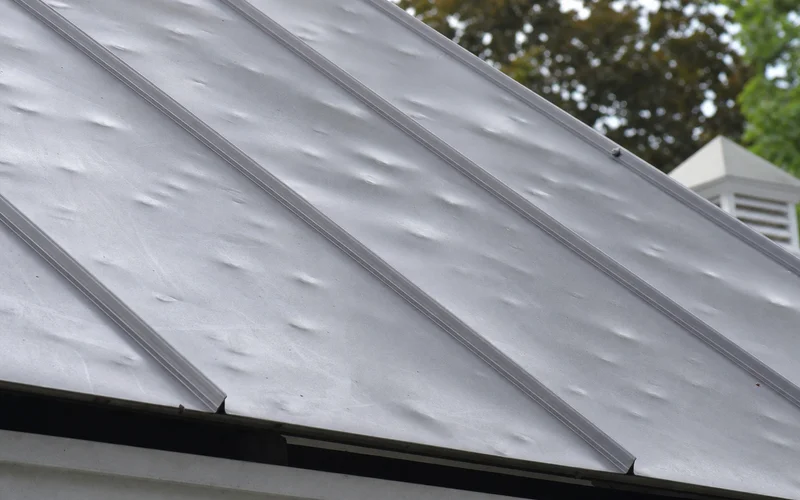
- Hail denting on large hail. Severe hailstorms dropping 1.5-inch or larger stones can visibly dent these panels. The dents remain purely cosmetic on quality 24-gauge steel options, causing no waterproofing impact, but they do not pop back out.
- Skill-dependent installation. A sloppy metal job costs almost as much as a perfect one but performs significantly worse. Our field inspectors frequently see major issues when a crew that mostly handles asphalt attempts a standing seam project. These mechanical seams require exact precision to remain watertight.
- Longer installation time. A typical metal project runs three to five days, compared to just one or two days for standard shingles. The property experiences less noise disruption per day, but the project drags on for a longer total duration.
- Noise concerns. Heavy rain on a bare-deck installation will be loud, though those are not proper residential setups anyway. With standard underlayment and proper attic insulation, the noise difference versus traditional shingles is barely noticeable.
Connecticut-Specific Weighting
We use a localized scoring system to help property owners weigh these factors against actual New England weather patterns. The unique combination of heavy snow loads and humid summers requires a specific approach to material selection.
See also: Metal Roof Lifespan and Warranties.For Hartford County specifically, here is how the data breaks down:
| Factor | Weight in CT | Real-World Impact |
|---|---|---|
| Lifespan advantage | High | 40 to 70 years vs 20 to 30 years for asphalt |
| Snow shedding | High | Prevents dangerous structural ice dams |
| Hail risk | Low | 1.5-inch hail remains a rare occurrence |
| Wind Resistance | High | 140+ mph rating defends against coastal storms |
| Energy efficiency | Moderate | Lowers cooling costs during long hot summers |
| Aesthetic fit | Variable | Depends entirely on your neighborhood style |
| Upfront cost | High | Requires a $25,000+ initial investment |
The combination of a 70-year lifespan and premium ice-dam protection makes metal an exceptionally strong choice. The neighborhood aesthetics and the heavy initial cost remain the two main reasons it is not the default standard.
Best Home Types for Metal in Hartford County
Our portfolio data clearly highlights which architectural styles and ownership timelines benefit most from this upgrade. Local neighborhood trends dictate how much value this material will actually add to your home.
Where Metal Makes Perfect Sense
Metal provides the strongest fit and highest return on investment for:
- Avon hilltop colonials dealing with intense snow-shed needs and high wind exposure.
- West Hartford Tudors where designer architectural panels perfectly match the historic period.
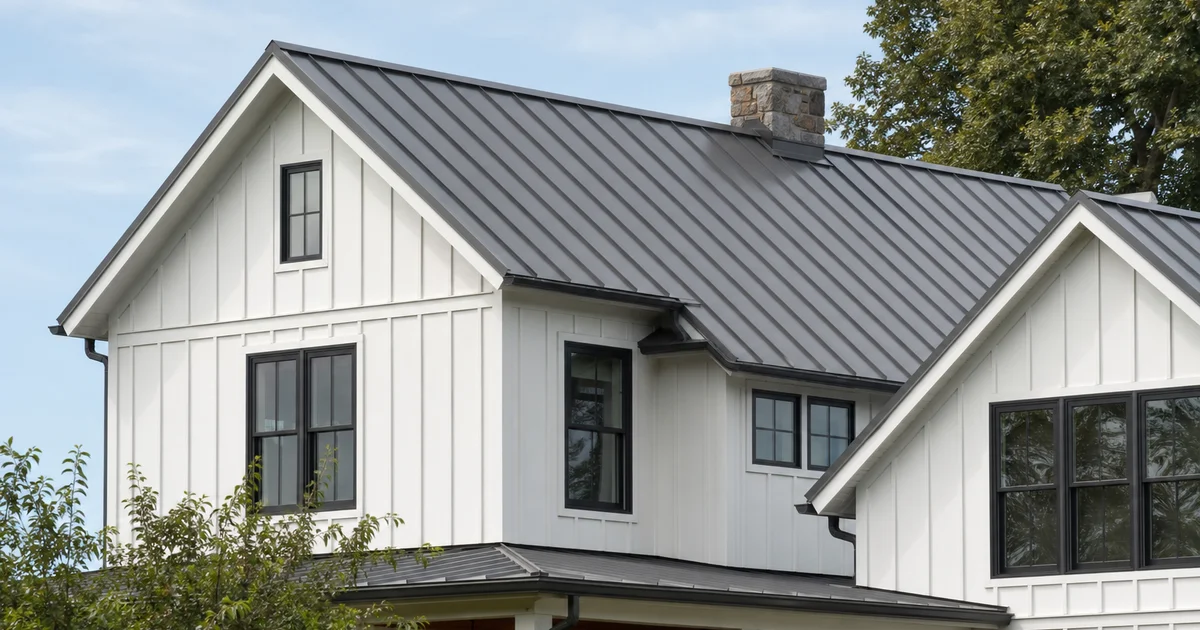
- Modern farmhouse builds where a sleek standing seam aesthetic is an expected design element.
- Coastal or riverside properties utilizing marine-grade aluminum to resist moisture and salt corrosion.
- Long-tenure family homes in any town where the impressive 50-to-70-year lifespan eliminates future replacements.
- High-elevation properties requiring maximum defense against extreme winter weather.
Where You Should Reconsider
The material is less ideal in specific situations. Our estimators generally steer clients to traditional shingles under these conditions:
- Standard tract subdivisions where the traditional asphalt aesthetic strictly dominates the local market.
- Short-tenure ownership where the seller plans to move within 10 years and will not recoup the investment.
- Strict HOA restrictions that simply do not accept any non-traditional roofing materials.
When to Stick with Asphalt
We regularly advise homeowners to choose architectural asphalt when budget constraints demand a more immediate, cost-effective solution. The honest truth for many Hartford County residents is that reinvesting those initial cost savings elsewhere makes better financial sense.
A high-quality architectural asphalt installation with proper ventilation will reliably hit 25 to 30 years. Modern lines like GAF Timberline HDZ or Owens Corning Duration offer excellent 130 mph wind resistance at a fraction of the price. The massive cost savings versus metal can easily fund other crucial home improvements, like new windows or upgraded siding.
Our company installs both premium materials, so this recommendation depends entirely on your unique situation rather than a hidden sales quota. The free written estimate process asks all the right questions to point clearly to the smartest option. You get honest data, objective comparisons, and a clear path forward for your home.
Conclusion: Evaluating Metal Roofing Pros and Cons
We hope this detailed breakdown clarifies the real-world facts behind a major exterior investment. Deciding if you should get a metal roof requires looking closely at your budget, your neighborhood, and your timeline in the home.
If you are a long-term resident ready to eliminate future roof replacements, this premium upgrade provides unmatched peace of mind.
Reach out to our team today to schedule a thorough inspection, and let us help you lock in the perfect defense for your property.