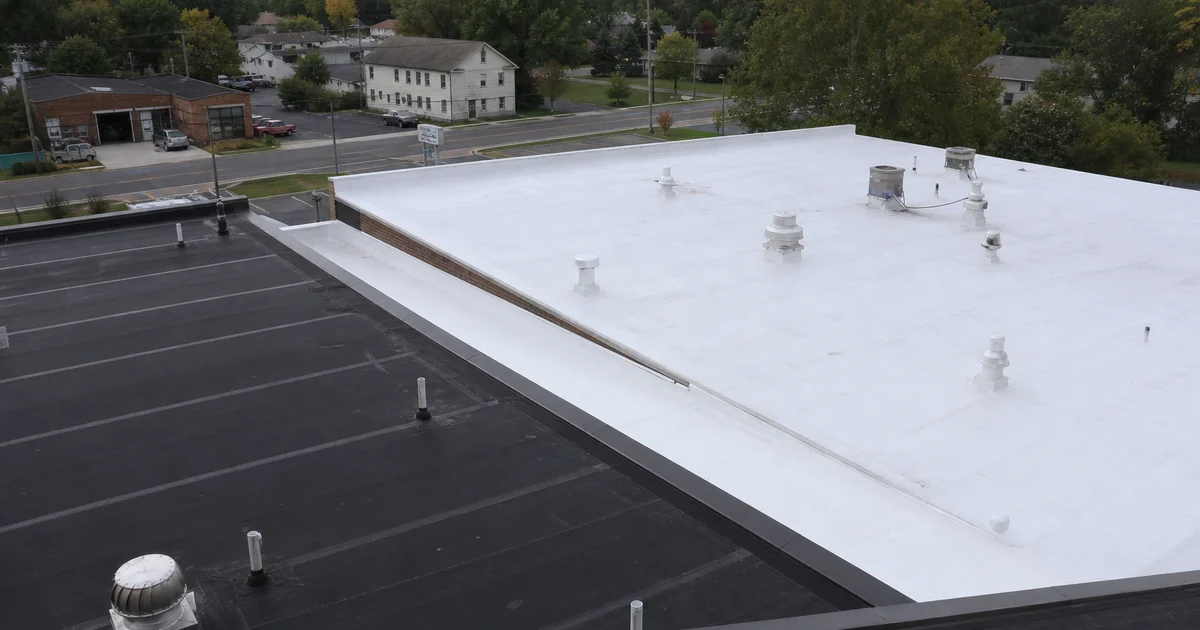
Property managers and homeowners constantly ask us to help them choose the right roofing system. From what we have seen, if you are comparing an epdm vs tpo flat roof, making the correct choice is the dividing line between decades of protection and constant leak repairs. Many people miss the fact that picking the correct membrane can dramatically lower maintenance costs.
Our team will break down the exact performance data for these systems and walk through the specific choices that make sense for Connecticut properties.
Let’s look at the actual 2026 statistics and explore practical ways to respond to harsh weather. The goal is to outline the exact differences so you can make a clear, confident choice.
The Two Dominant Commercial Flat-Roof Materials
EPDM and TPO are the two most reliable choices for commercial flat roofs in Connecticut. Both options deliver 20 to 30 years of service life when installed correctly. The primary differences lie in their chemical makeup, installation methods, and visual appearance.
We install both systems regularly and observe directly how their unique properties perform. Ethylene Propylene Diene Monomer (EPDM) is a synthetic rubber membrane that contains carbon black to increase flexibility and UV resistance. This time-tested material has a track record dating back to the 1960s.
Thermoplastic Polyolefin (TPO) is a newer option made from a blend of polypropylene and ethylene-propylene rubber. It features a highly reflective surface designed to lower cooling costs.
Here is a quick overview of their basic characteristics:
- EPDM Rubber: Black surface absorbs heat, uses chemical adhesives for seams, and offers extreme cold-weather flexibility.
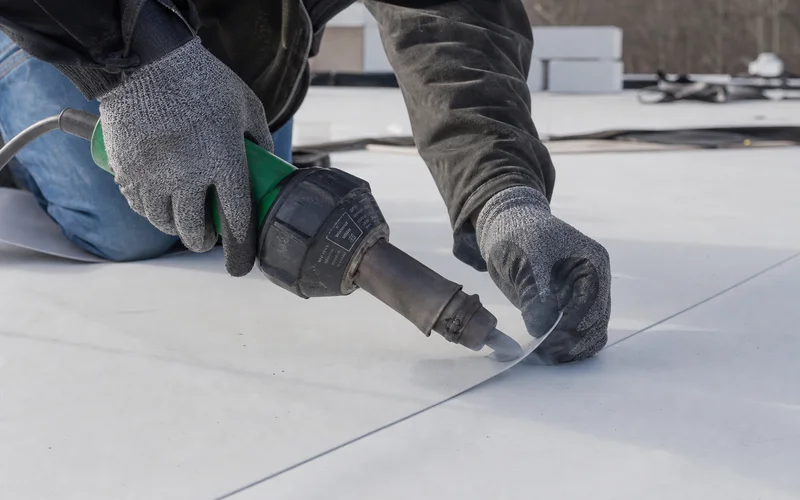
- TPO Membrane: White or gray surface reflects heat, requires a hot-air welder for seams, and provides excellent energy efficiency.
Side-by-Side Comparison
A direct tpo vs epdm comparison reveals that EPDM offers a longer track record, while TPO provides superior cooling benefits. You can easily evaluate which system fits your building by looking at the raw data.
Our experts compiled the latest 2026 industry statistics to help you make an informed decision. EPDM installations typically cost between $7.00 and $12.50 per square foot. TPO membranes run slightly higher at $8.00 to $14.50 per square foot.
| Factor | EPDM (Rubber) | TPO (Thermoplastic) |
|---|---|---|
| Membrane chemistry | Synthetic rubber with carbon black | Polypropylene and ethylene-propylene |
| Surface color | Black (absorbs heat) | White/gray (reflective) |
| Seam method | Tape and liquid primer | Heat welded at 400°F |
| Typical lifespan | 30-40 years | 15-30 years |
| Energy performance | Heat-absorbing (winter benefit) | Reflects up to 80% of solar radiation |
| Repair difficulty | Moderate (adhesive patches) | Higher (requires hot-air welder) |
| Cost (2026 average) | $7.00-$12.50/sq ft installed | $8.00-$14.50/sq ft installed |
| Best application | Standard commercial buildings | High cooling demand facilities |
This data shows that both materials offer strong value. Your final choice will depend on your specific climate needs and budget constraints.
When EPDM Is the Right Call
EPDM is often considered the best commercial flat roof material for standard buildings where cold-weather flexibility and easy repairs are the top priorities. This durable rubber membrane is the default recommendation for most Hartford County projects. See also: Commercial Flat Roof Cost in Connecticut.
We highly recommend EPDM for property owners who want a proven, low-maintenance system. A well-maintained EPDM roof often lasts 30 to 40 years.
This longevity makes it an exceptional long-term investment. Several specific factors make this rubber membrane a smart choice:
- Long industry track record: Roofers have over 60 years of local installation data to study.
- Simple repair logistics: Local crews can easily apply seam-tape patches without specialized heating tools.
- Winter heat absorption: The black surface provides a slight benefit in Connecticut, where winter heating loads exceed summer cooling loads.
- Residential storm repair: Many Connecticut homeowners now use EPDM to replace aging flat roofs on porches or home additions after severe weather.
- Exceptional cold tolerance: The rubber material easily handles thermal movement and extreme freeze-thaw cycles without cracking.
Our crews use EPDM as the standard option unless a building requires specific reflective capabilities. It delivers reliable results year after year.
When TPO Is the Right Call
TPO is the best option for buildings with high cooling demands. Facilities like restaurants, data centers, and refrigerated warehouses benefit greatly from its reflective surface.
We often specify TPO when energy efficiency is the primary goal. The Cool Roof Rating Council reports that highly reflective materials like TPO can bounce up to 80% of the sun’s radiation away from the building.
This reflection can drop the surface temperature of the roof by as much as 50 degrees on a hot sunny day. You should seriously consider TPO in these specific situations:
- Reflective performance matters: Buildings with massive summer cooling loads see noticeable energy savings.
- Heat-welded seam preference: Many property managers trust the molecular bond created by hot-air welding.
- Energy code compliance: Newer commercial buildings often require reflective surfaces to meet strict local energy codes.
- Aesthetic requirements: The clean white surface looks better from the upper floors of adjacent office buildings.
For typical warehouse or retail properties in Hartford County, the reflective cooling savings are modest. Buildings with intense air conditioning needs, however, will see a fast return on investment.
Seam Method Differences
The seam application approach highlights the main difference between rubber vs thermoplastic membranes. Both methods create watertight seals, but they require entirely different tools and skills.
EPDM Adhesive Bonds
EPDM seams rely on chemical adhesion. Installers use a specialized primer to clean the membrane edges. They apply a strong seam tape to bond the adjacent sheets and finish the edge with a top sealant cap.
We appreciate how repairable this adhesive system is. A maintenance crew can simply re-clean, prime, and tape a failed seam using basic hand tools. This keeps future repair costs relatively low.
TPO Welded Joints
TPO seams require a hot-air welder to create a molecular bond. The technician uses the tool to heat the membrane edges to roughly 400 degrees Fahrenheit. A heavy pressure roller then fuses the two melted sheets into a single, continuous piece of plastic.
Our technicians know that a properly welded TPO seam is stronger than an adhesive bond. A failed TPO seam is much harder to fix, as it requires bringing heavy heating equipment back onto the roof.
Connecticut Climate Considerations
Connecticut’s extreme temperature swings and heavy snow loads demand a roof that can handle severe weather. Both flat roof materials hold up well to local conditions, but they respond differently to specific seasonal threats.
We always evaluate a building’s drainage system before recommending a membrane. The freeze-thaw cycle in cities like Hartford creates a unique hazard called ice expansion.
Ponding water freezes overnight, expands, and forces its way under membrane edges and penetration flashings. Here is how the two materials handle the local climate:
- Freeze-thaw cycles: EPDM has a slight advantage here, as the synthetic rubber remains highly flexible in sub-zero temperatures.
- Summer heat: TPO reduces cooling loads during the short Connecticut summer.
- Snow load: Both membranes handle heavy winter snow loads identically once properly attached to the substrate.
- Ice damage at edges: The integrity of your parapet and scupper details matters far more than your choice of membrane.
The local climate does not firmly dictate one material over the other. Your final choice will come down to your specific aesthetic preferences and cooling requirements.
Cost Comparison
In 2026, you can expect to pay between $7.50 and $16.00 per square foot for a complete commercial flat roof replacement. The final price tag depends heavily on membrane thickness, insulation upgrades, and the amount of tear-off required.
Our estimating team tracks local material costs closely to provide accurate budgets. The price difference between these two systems is generally quite small.
Material thickness heavily influences the final total. Here are the current average installation costs per square foot in the Hartford area:
| Material and Thickness | 2026 Price Range (Per Sq Ft) |
|---|---|
| 60-mil EPDM | $7.00 - $10.00 |
| 60-mil TPO | $8.00 - $11.00 |
| 90-mil EPDM | $9.00 - $12.50 |
| 80-mil TPO | $10.00 - $14.50 |
For a standard 10,000 square foot commercial building, the material choice only changes the total cost by a few thousand dollars. This makes performance factors much more important than the initial purchase price.
Repairability Over the Roof’s Life
Flat roofs typically require three to eight repair events over their lifespan. You must plan for minor punctures, scupper updates, and penetration flashing replacements as the building ages.
We constantly remind clients that long-term maintenance costs matter just as much as the initial installation price. Recent 2026 data shows that minor commercial roof repairs range from $300 to $1,200, while moderate damage costs between $1,200 and $5,000 to fix.
This data proves that routine maintenance is crucial. The logistics of these repair events vary significantly by material:
- EPDM repairs: Typical events cost $300 to $1,500. Most local roofers carry the necessary tape and primer in their trucks, making emergency fixes fast and simple.
- TPO repairs: Typical events cost $500 to $2,500. The crew must transport a heavy hot-air welder to the site, which increases labor time and equipment fees.
Property managers with large portfolios across multiple buildings often prefer EPDM. The simpler repair process allows for faster response times during severe rainstorms.
Bottom Line
If you are still debating an epdm vs tpo flat roof, EPDM remains the most practical and reliable choice for the vast majority of Hartford County properties. The material offers proven longevity, excellent winter performance, and affordable long-term repair costs.
We install TPO when a specific building requires maximum energy efficiency or strict code compliance. Both membranes will deliver decades of reliable protection if you hire a skilled contractor to install them correctly.
During our commercial flat roof free assessments, you will receive a concrete recommendation that fits your building’s specific use, weather exposure, and financial budget. Reach out today to schedule an inspection and secure your property.