We often see property managers spending thousands on endless patching when recognizing the signs commercial flat roof needs replacement makes more financial sense. You know how frustrating it is to deal with the exact same leak after every heavy Connecticut rainstorm.
From our experience, commercial EPDM and TPO membranes give clear warnings before a total failure occurs.
The most obvious replacement signals usually cluster together as the materials age. Recognizing these issues early saves your business from emergency interior water damage and ruined inventory. We will walk you through the top indicators of roof failure, explain the 2026 data behind repair costs, and share a framework to help you decide your next steps.
Seven Signals to Watch For: Signs Commercial Flat Roof Needs Replacement
EPDM and TPO commercial flat roofs send fairly consistent signals as they approach their end of life. Identifying roof decay quickly is the key to preventing sudden structural damage as you approach the typical epdm roof end of life.
Our crews look for seven specific indicators that a membrane has reached its absolute limit. Once two or three of these appear together, a full replacement is usually the right call rather than continued patching.
1. Ponding Water Beyond 48 Hours
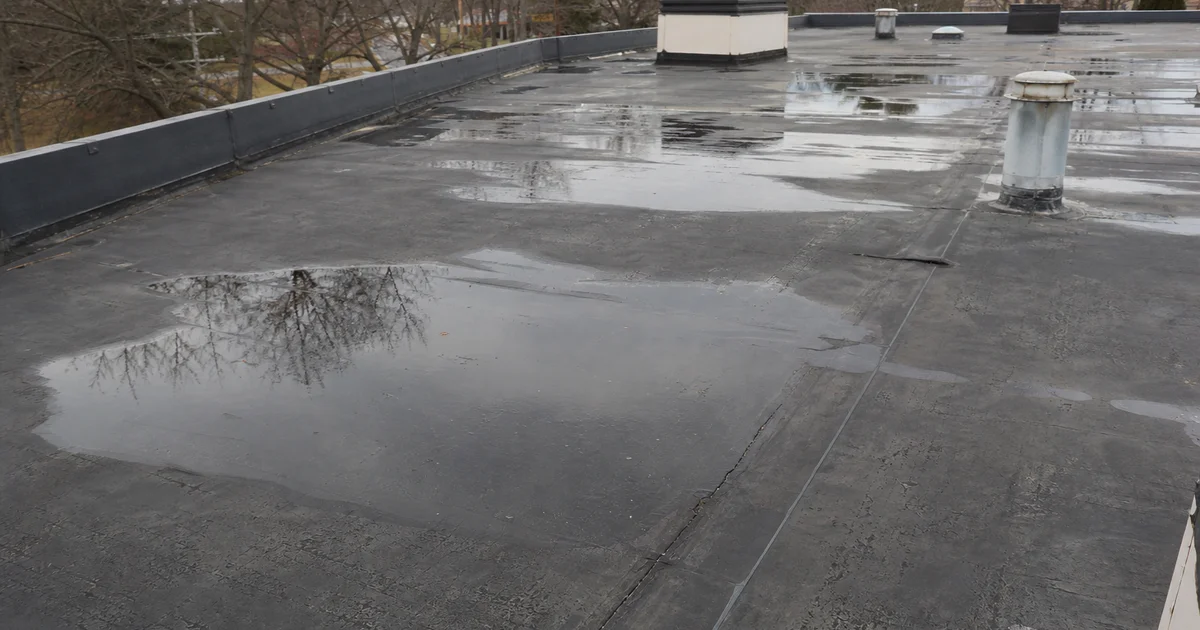
A properly drained flat roof clears standing water within 24 to 48 hours after rain. Persistent puddles indicate a collapsed drainage system, major deck deflection, or completely compressed insulation, and this standing water rapidly accelerates membrane breakdown.
We strictly follow the International Building Code, which requires a minimum slope of 1/4 inch per foot to ensure positive drainage. When water sits for days, it creates a massive structural burden. According to 2025 engineering data from Polyglass, just one inch of water spread over a 10-by-10-foot area adds 520 pounds of dead weight to your building.
This immense pressure compounds the leak risk and creates an environment where structural failure becomes inevitable.
2. Seam Separation
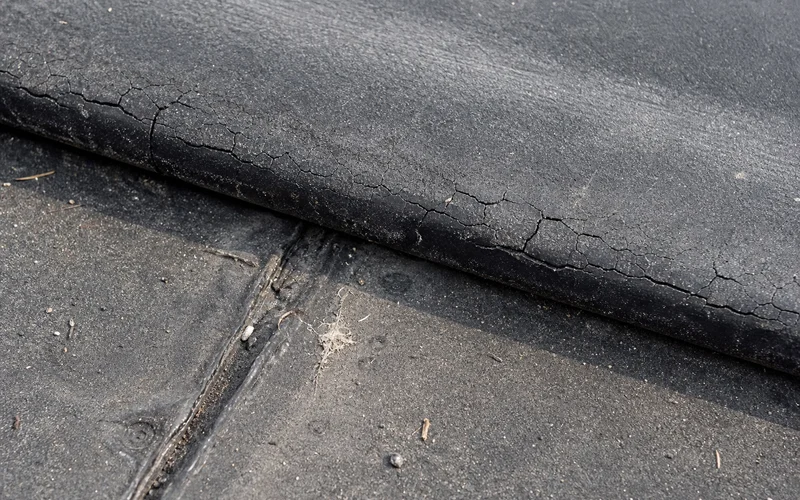
EPDM seams are taped or adhered with bonding adhesive. Over time the adhesive cures and experiences brittle failure, particularly at high-stress corners and parapet transitions.
Our technicians frequently spot these separations exposing the insulation layer. Visible gaps at the seams are an active leak risk. During a harsh New England winter, water freezing inside these open seams will expand and tear the roof apart.
3. Membrane Shrinkage
EPDM rubber shrinks slightly over its service life as it loses essential plasticizers. Our inspectors notice that after 20-plus years of enduring New England weather, you will see the membrane pulling away from termination bars at parapets.
This tension exposes the underlying adhesive or bare substrate. Once visible, patching becomes significantly harder. Applying a temporary seal to a tightly stretched membrane is nearly impossible because the material lacks the flexibility to hold a new patch.
4. Blistering and Lifted Membrane
Bubbles or lifted areas in the membrane indicate trapped moisture below or failed base adhesive. Small, isolated blisters can be patched successfully by a professional crew.
Widespread blistering signals a systemic failure of the bond to the insulation below. If more than 25 percent of the surface shows this type of lifting, 2026 industry standards strongly recommend a full replacement.
We strictly advise against coating a heavily blistered surface, as it simply traps more moisture and rapidly degrades the remaining insulation boards.
5. Membrane Brittleness
A healthy EPDM membrane is flexible, meaning you can press it and it springs back into shape. An aged membrane feels incredibly stiff and may crack when flexed by hand.
Our repair crews treat severely rigid materials as an immediate structural hazard. Walking on a brittle membrane can break it under your boots. That fragile texture is a same-week replacement signal because the roof can no longer handle normal thermal expansion.
6. Interior Leaks and Ceiling Staining
Active leaks or visible ceiling staining in the spaces below indicate the membrane is no longer waterproof. Even isolated leaks on an aged roof typically signal that multiple other compromise points exist across the surface.
We frequently see building owners fix interior cosmetic damage without addressing the dying flat roof above. Water traveling through the deck often ruins expensive drop ceilings, damages inventory, and creates hazardous mold growth. Ignoring the exterior guarantees the exact same stains will return next month.
7. Age (The Underrated Signal)
A 22-year-old EPDM roof is approaching the end of its expected service life regardless of how it looks. According to 2026 data from the EPDM Roofing Association, a standard rubber roof has a life expectancy of 25 to 30 years under optimal conditions.
Our project planners treat any membrane hitting that age bracket as a prime candidate for a proactive upgrade. If you see any of the signals above on a roof past 20 years, the math heavily favors a full replacement over continued patching.
How Property Managers Assess
For property management companies tracking multiple buildings, having a useful assessment framework eliminates guesswork. Evaluating the damage logically prevents wasting thousands of dollars on a system that is destined to fail next season.
Our standard matrix relies on counting the exact number of distress signals present on a specific building. This rough framework helps prioritize your capital budget across an entire property portfolio.
| Signal Count | Assessment |
|---|---|
| 0-1 signals on a roof under 12 years | Routine maintenance and drain cleaning |
| 1-2 signals on a roof 12-18 years | Detailed inspection, possible patches |
| 2-3 signals on a roof 18-25 years | Replacement planning recommended |
| 3+ signals on any age | Replacement is the right call |
We use this grid to give owners a clear, math-based recommendation. Taking the emotion out of the decision ensures your maintenance dollars go exactly where they provide the highest return.
What Drives Premature Failure
Some commercial flat roofs fail earlier than expected due to specific environmental factors and maintenance habits. Identifying these hazards early allows you to protect your investment and avoid unnecessary flat roof replacement signals. See also: EPDM vs TPO Commercial Flat Roofing.
Our repair crews constantly find perfectly good materials ruined by avoidable mistakes. Common causes include:
- Foot traffic damage from HVAC servicing, satellite installations, or roof-mounted equipment maintenance.
- Wet insulation from a tiny flashing failure that was not caught early.
- Improper detailing at scuppers, drains, or parapet transitions during the original installation.
- UV exposure without protective reflective coatings on aged EPDM.
- Standing water from neglected drainage problems compounding over several years.
We make finding the root cause our top priority when investigating commercial roof failure signs. Replacing the membrane without addressing the underlying issue produces another short-life roof.
The Free Assessment
For commercial property managers in Connecticut, getting an objective look at your infrastructure helps you plan your budget accurately. Guessing the condition of your building is a dangerous and expensive game.
We provide free building assessments with photo documentation, core samples to check for wet insulation, and a detailed itemized written report. This comprehensive evaluation covers:
- Current condition assessment of the membrane.
- Specific failure indicators present on the surface.
- Recommended action (repair, partial recover, or full tear-off).
- Itemized 2026 cost estimate based on current material pricing.
- Service-life expectation for any recommended scope of work.
This transparent process requires no upfront cost and includes absolutely no high-pressure pitch. We assess multiple buildings on a portfolio basis when that is the right scope for the facility manager.
Bottom Line
A commercial flat roof with multiple failure signals on a 20-plus year service life has officially earned a replacement. Funneling cash into localized patches at this late stage is a guaranteed way to lose money.
Our pricing data shows that standard patching costs between $350 and $900 per square repaired in 2026. Spending those inflated repair rates today will easily eclipse the cost of a properly planned commercial flat roof replacement in just three to four years.
The honest assessment that our free evaluation provides is the right starting point to address the signs commercial flat roof needs replacement. Contact us today to schedule your inspection and secure your building before the next severe storm hits.