You probably already know that proactive maintenance beats a full roof replacement any day.
The dividing line between a simple repair and a massive project often comes down to catching issues early. Catching moisture beneath the surface saves property owners tens of thousands of dollars in structural damage.
We see how harsh Connecticut temperature swings stretch and stress rubber materials year after year. These rapid shifts turn small seam separations into expensive leaks. The current 2026 building codes show that a proper epdm roof installation process directly prevents these common failures.
Our team will walk you through the exact sequence required for success. Let’s look at the core materials, local cost factors, and the specific choices that guarantee a watertight seal. A commercial rubber roof install follows strict epdm install steps, moving from assessment to final detailing.
The Six-Step EPDM Roof Installation Process
A commercial rubber roof install follows a strict sequence of assessment, tear-off, insulation, cover board, membrane placement, and detail flashing.
We apply this standard method across most Hartford County buildings to ensure consistent quality. The main variables are the total square footage and the number of penetrations on the deck.
Step 1: Building Assessment and Pre-Install Planning
The first step involves thoroughly inspecting the deck and confirming the work scope. Before any old material comes off, we walk the existing roof with the property manager.
Our crew takes core samples to assess whether the underlying insulation is wet or dry. Finding trapped moisture early is crucial because leaving wet insulation rots the deck.
We frequently use FLIR thermal imaging cameras in 2026 to pinpoint hidden water. This targeted approach prevents you from paying for unnecessary removal. All local building permits and engineering reviews are finalized during this stage.
Step 2: Tear-Off (Where Applicable)
A full replacement requires stripping away the old membrane and any ruined insulation. Dry insulation in good condition can sometimes serve as a base layer. Saturated or damaged insulation always gets removed and discarded. This tear-off phase usually runs one to three days for a standard 5,000 to 15,000 sq ft commercial property.
Disposal costs are a major factor in Connecticut. Transfer stations in towns like Manchester and Barkhamsted charge roughly $135 to $150 per ton for construction debris in 2026. Water-logged materials weigh significantly more than dry ones. Removing that heavy, wet debris quickly inflates your local dump fees.
Step 3: ISO Board Insulation
We install Polyisocyanurate (ISO) board insulation directly onto the roof substrate. This layer is either mechanically fastened with screws or secured using heavy-duty bonding adhesive. The thickness of the ISO board depends entirely on the target R-value required by local codes.
Connecticut building codes in 2026 generally require flat roofs over conditioned spaces to hit a minimum of R-30. Since standard ISO board provides about an R-6.8 value per inch, you will need roughly 4.5 inches of insulation to comply.
We also use tapered insulation systems to create a slope-to-drain profile on flat decks. Proper sloping stops standing water from degrading the rubber over time.
Step 4: Cover Board
A dense cover board acts as a rigid shield between the soft insulation and the rubber membrane. We lay down a 1/4-inch or 1/2-inch high-density (HD) polyiso or a specialized gypsum board like DensDeck Prime. This protective layer provides a clean, hard surface for the adhesives to grip.
A strong cover board resists serious damage from severe hail and heavy HVAC foot traffic. Skipping this step is a common tactic used to lower upfront estimates. Removing the cover board severely cuts the lifespan of the entire system. Protecting the insulation underneath is mandatory for long-term performance.
Step 5: EPDM Membrane Install
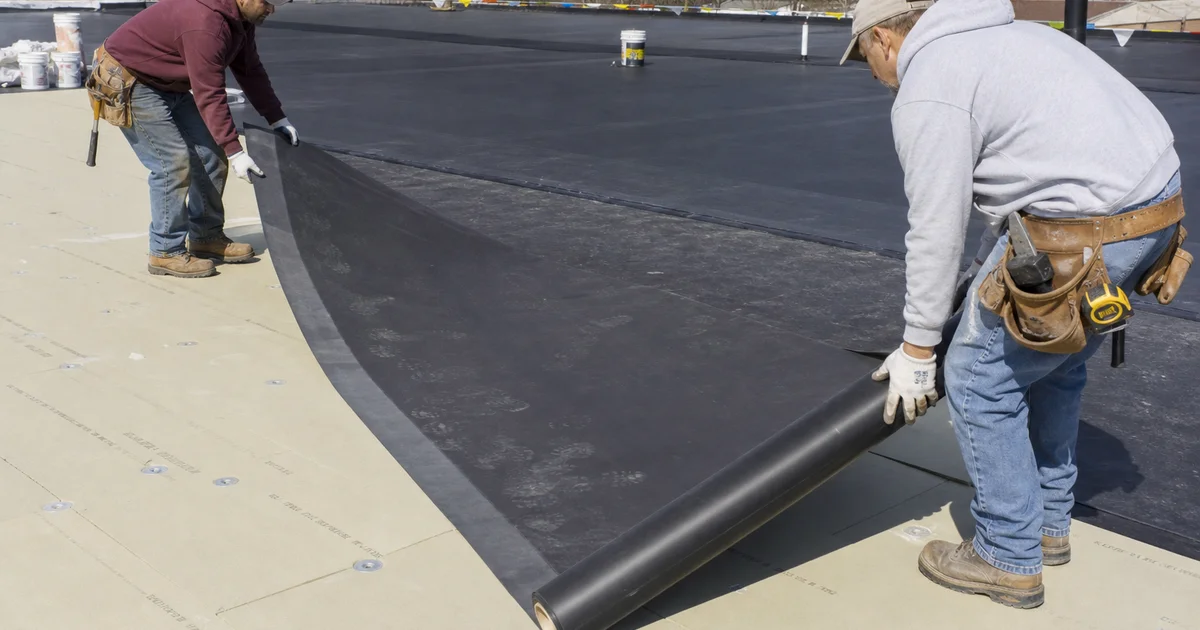
The main waterproofing layer goes down using large rolls of synthetic rubber. The 60-mil or 90-mil EPDM membrane rolls out in large sheets that are typically 10 to 20 feet wide and 100 feet long. Modern 2026 innovations like Carlisle’s Self-Adhering Technology (SAT) rolls feature factory-applied adhesive. These pre-taped options eliminate messy buckets of glue and install up to three times faster.
The attachment method usually falls into one of three categories:
- Fully adhered: The membrane is glued directly to the cover board. This premium option offers the absolute highest wind uplift resistance.
- Mechanically fastened: Heavy-duty plates and screws hold the sheets down. This is a faster method commonly used for budget-conscious commercial spaces.
- Ballasted: The loose membrane is weighed down by heavy river rock or concrete pavers. This style is rare in Connecticut due to the intense weight burden on the building structure.
We bond the seams between the overlapping sheets using primer and specialized seam tape. This specific step creates a continuous, watertight field across the whole building.
Step 6: Detailing and Termination
Flashing the vulnerable edges and penetrations seals the system against leaks. The longevity of any commercial flat roof install heavily depends on how the perimeter is handled. Seam failures and poorly sealed penetrations cause 70% of all flat roof leaks.
We pay special attention to these critical zones:
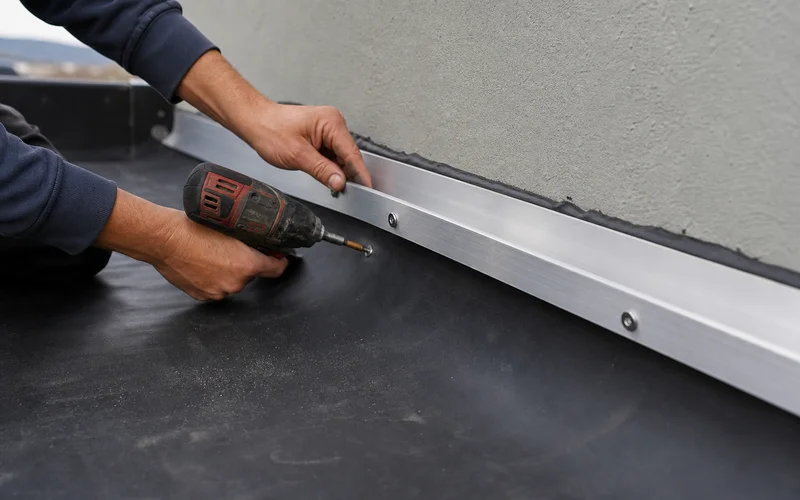
- Parapet wall terminations: The rubber runs up the inside wall and is secured with a metal termination bar.
- Scupper boxes: Corroded metal gets replaced, and new flashing is integrated tightly into the new membrane.
- Drains: The primary drains are re-flashed using target sumps and secure clamping rings.
- Penetrations: Vent stacks, electrical conduits, and HVAC curbs all receive custom-fabricated boots.
- Cant strips: These angled inserts prevent the membrane from bending at a sharp 90-degree angle against walls.
What 60-Mil vs 90-Mil Means
EPDM membrane thickness determines the durability and warranty length of the installation. Rubber roofing comes in two primary commercial grades that suit different building needs. The 60-mil option weighs roughly 0.4 pounds per square foot and handles standard weather conditions. The thicker 90-mil version offers far superior puncture resistance.
| Spec | Service Life | Cost Premium | Best For |
|---|---|---|---|
| 60-mil | 20-25 years typical | Standard | Standard commercial use |
| 90-mil | 25-30 years typical | +15-25% | High-traffic, longer-tenure |
For most Hartford County commercial properties, a 60-mil system is the correct choice. A 90-mil product pays for itself if the deck faces chronic foot traffic from maintenance crews. Property owners planning to hold the building for 25 years or more also benefit from the thicker material.
Typical Timeline for the EPDM Roof Installation Process
A standard 5,000 square foot project takes about five working days to finish. We structure the installation process to keep the building protected from rain during the transition. Larger commercial spans covering 15,000 square feet or more scale proportionally and require 10 to 15 working days. Using modern self-adhering membranes can often shave a full day off this schedule by eliminating the curing time needed for traditional adhesives. See also: EPDM vs TPO Commercial Flat Roofing.
- Day 1: Tear-off procedures, structural deck inspection, and initial ISO board placement.
- Day 2: Completing the ISO board layer and securing the rigid cover board.
- Day 3: Rolling out the main rubber membrane and securing it in place.
- Day 4: Detailed flashing work around parapets, scuppers, drains, and roof penetrations.
- Day 5: The final visual inspection, client walkthrough, and full job site cleanup.
Property Manager Considerations
Keeping tenants comfortable and safe requires careful planning before the work begins. Commercial properties with active occupants present specific scheduling challenges. Our crews coordinate directly with management to minimize disruptions during business hours. A successful commercial flat roof project requires clear communication from start to finish.
Managing a live construction site involves several key factors:
- Noise sensitivity: The demolition phase causes the most vibration and noise.
- Odor management: Traditional bonding adhesives emit strong solvent fumes that linger for up to 48 hours. Using low-VOC adhesives in 2026 drastically reduces this issue near active HVAC intake vents.
- Tenant communication: Property managers receive a ready-to-use notice template from our team.
- Material staging: Finding safe spaces for dumpsters and crane drops requires logistical planning.
What Makes the Difference
The final quality of an installation depends on strict attention to the supporting layers. Two different contractors can use the exact same brand of material and produce wildly different lifespans. The true value lies beneath the surface and in the flashing details. A 25-year rubber roof installation costs only slightly more upfront than a 15-year version.
The long-term performance comes down to these variables:
- Cover board: Including a high-density protective shield beneath the rubber.
- Detail integrity: Properly sealing the parapets, drains, and edge metals.
- Insulation standards: Meeting the R-30 local code and ensuring the deck is bone dry.
- Substrate prep: Removing all sharp debris and creating a perfectly smooth surface.
- Crew skill: Having trained professionals execute the seam taping perfectly.
We never skip these steps to save a few dollars. The upfront investment in quality materials and skilled labor pays massive dividends over the next two decades.
Protecting your commercial building requires choosing the right materials and the right partner. Every detail matters, from the insulation thickness to the exact placement of the termination bars.
If your current roof is showing its age or suffering from recent storm damage, do not wait for a major leak to take action. Understanding the epdm roof installation process is the first step toward securing your investment. Reach out to our team today for a comprehensive inspection, and let us help you lock in a watertight future.